Blast Freezing Systems for Industrial Freezing

Blast freezing systems pull product from above-freezing temperature to deep frozen core in hours, using high-velocity cold air (typically -20°F to -40°F at 1,500–3,500 ft/min). Faster freezing creates smaller ice crystals, preserving product texture and quality that conventional slow freezing damages. Architecture choice — tunnel, spiral, plate, IQF, or batch — is driven by product type, throughput, and operations workflow.

By US Cold Storage Builders Engineering Team
📅 Now booking 60–90 days out | Call (346) 676 - COLD
Performance IndexUpdated quarterly
-20°F to -40°F
Operating Temperature
1,500–3,500 ft/min
Air Velocity Range
Cascade
Standard Refrigeration Spec
Refrigeration

Five architectures, one common requirement — deep cold at high velocity.

What It Does

Rapid freezing preserves what slow freezing damages.

Conventional slow freezing forms large ice crystals inside cellular product, rupturing cell walls and degrading texture, color, drip loss, and shelf life on thaw. Blast freezing pulls product through the freezing zone fast enough that ice crystals form small and uniform. The architecture, refrigeration spec, and envelope are all built around this throughput speed.

  • Hours to deep frozen, not days
  • Smaller ice crystals preserve cellular structure
  • Lower drip loss on thaw
  • Better texture, color, shelf life
  • Standard for meat, seafood, prepared foods, IQF produce, premium frozen
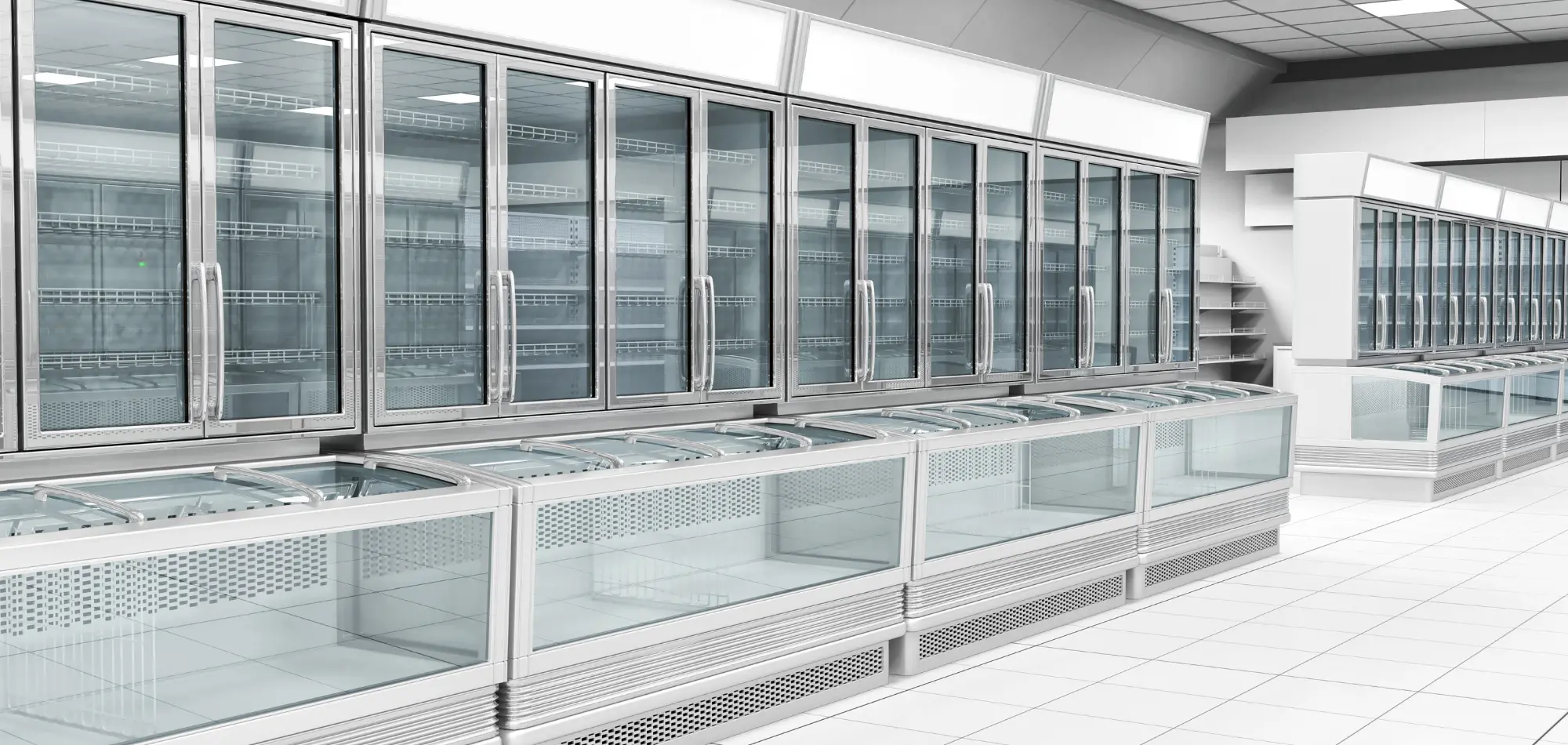
Blast freezer interior with product on racks during rapid freeze cycle
Architectures

Five system types by product and throughput.

Tunnel (continuous belt through enclosure), spiral (vertical spiral conveyor), plate (compressed between refrigerated plates), IQF (fluidized discrete particles), batch (loaded, frozen, unloaded). Selection depends on product form, throughput, operations workflow, and capital budget.

  • Tunnel — continuous belt; high throughput, large footprint
  • Spiral — vertical tower; high throughput in compact footprint
  • Plate — compressed between cold plates; thin/uniform product
  • IQF — fluidized cold air; berries, vegetables, discrete particles
  • Batch / cabinet — racks loaded as batches; lower throughput, lower capital
Frozen food manufacturing line feeding blast freezer system
Refrigeration

Cascade is the standard for serious blast.

Operating temperatures of -20°F to -40°F push single-refrigerant systems out of their efficient operating range. Single-stage ammonia at -40°F operates at very low suction pressure with reduced volumetric efficiency. CO2 transcritical at deep cold has unfavorable pressure ratios. Ammonia/CO2 cascade — CO2 low-temp, ammonia high-temp — achieves 25–40% lower operating energy.

  • Cascade — standard for new blast freezer construction since ~2015
  • Sized for peak batch pull-down, not steady-state
  • Defrost integrated into cycle (hot-gas or electric, timed for production gaps)
  • Fan power 20–30% of total energy — variable-speed control matters
  • Lead times 20–28 weeks for cascade compressor packages (Q1 2026)
Blast freezer mechanical room with cascade refrigeration package
Envelope

Envelope and slab requirements

Blast freezer envelope is more demanding than standard frozen storage. Deeper insulation (R-50+ typical), more aggressive vapor barrier (continuous, sealed at every penetration), frost-heave-protected slab with active underslab heat. Door selection drives infiltration — fast roll-up doors with air curtains for high-cycle applications, insulated swing doors for low-cycle.

Airflow

Airflow engineering

Air velocity of 1,500–3,500 ft/min across product surface drives convective heat transfer. Air distribution matters as much as velocity — uneven airflow leaves warm spots on product that finish freezing well after the average. Spiral and tunnel designs use baffled airflow patterns. Plate freezers eliminate airflow as a variable by direct conductive contact.

Sizing

Sizing for peak batch pull-down

Refrigeration is sized for peak batch pull-down, not steady-state. A 5,000 lb/hr blast tunnel pulling product from 35°F entry to -10°F core in 2 hours needs significantly more refrigeration tonnage than a 5,000 lb/hr cold storage facility at steady-state -10°F. Methodology:

  1. Determine product mass and entry/exit temperatures
  2. Calculate heat removed (sensible above freezing + latent at freezing + sensible below freezing)
  3. Divide by target dwell time → refrigeration capacity required
  4. Add safety factor for variability in product loading
  5. Verify against design ambient (gas cooler / condenser sized for hot day)
Operations

Operational considerations

  • Defrost integration. Hot-gas or electric defrost timed for production gaps.
  • Door management. Air curtains, fast-cycle doors, scheduled loading windows.
  • Product loading. Uniform load thickness prevents warm-spot dwell.
  • Sanitation. CIP capability for food applications; clean-out routes.
  • Energy monitoring. Sub-metered fans, compressors, defrost.
Build With Us

Tell us about your blast project

Tell us about your blast freezing project — product type, throughput, target freezing time, operations workflow. We design and build blast freezer envelopes and cascade refrigeration systems. Houston-headquartered · Design-build · Nationwide.

Budgeting

Cost and timeline planning ranges.

-20°F to -40°F

Operating Temperature

Deep cold standard

1,500–3,500 ft/min

Air Velocity

vs ~50 ft/min standard cold storage

20–30% of total

Fan Power

VFD control essential

R-50+

Envelope R-Value

Walls and ceiling, blast applications

$400–$700+/SF

Construction Cost

Envelope + cascade refrigeration

20–28 wk

Cascade Lead Time

Q1 2026

Services

Cold Storage Solutions, End to End

❄️ Cold Storage🧊 Blast Freeze🏗️ New Build🔧 Retrofit🌡️ Multi-Temp💊 Pharma-Grade📦 3PL Warehouses
FAQ

Common Questions

What is blast freezing?

Blast freezing is the rapid freezing of product by exposure to very cold air at high velocity. Product passes from above-freezing temperature to deep frozen (typically -10°F core temperature or colder) in hours rather than days. Faster freezing creates smaller ice crystals inside the product, preserving texture, color, and cellular structure that conventional slow freezing damages.

What types of blast freezers exist?

Five main architectures. Tunnel freezers (product moves through a long enclosure on conveyor). Spiral freezers (product on a spiral conveyor inside a tower). Plate freezers (product compressed between refrigerated plates). IQF (individually quick frozen — discrete particles fluidized in cold air stream). Batch / cabinet freezers (product loaded on racks, frozen as a batch, unloaded).

What refrigeration system serves blast freezing?

Ammonia/CO2 cascade is the standard specification for new blast freezer construction. Operating temperatures of -20°F to -40°F push single-refrigerant systems out of their efficient operating range. Cascade splits the work — CO2 in low-temp circuit, ammonia in high-temp circuit — and achieves 25–40% lower operating energy at -40°F vs single-stage ammonia.

What's the typical blast freezer airflow?

1,500–3,500 ft/min air velocity across product surface is typical, vs ~50 ft/min for conventional cold storage. High velocity drives convective heat transfer that pulls heat out of product rapidly. Fan power is substantial — fans typically consume 20–30% of total blast freezer energy.

How is blast freezer capacity specified?

By product throughput, not by floor area. Capacity is stated as lb/hr of product frozen from entry temperature to target frozen core temperature. Sizing methodology calculates refrigeration tonnage required to pull product through its freezing curve in the specified time window. Refrigeration is sized for peak batch pull-down, not steady-state.

What's the construction cost for a blast freezer?

$400–$700+ per SF for the blast freezer envelope and refrigeration, on top of the surrounding facility. The envelope is more demanding than standard frozen storage (deeper insulation, more aggressive vapor barrier, frost-heave protected slab). Cascade refrigeration carries 10–20% capital premium over single-stage ammonia. See /cost/blast-freezer-construction-cost for full cost methodology.

What operations need blast freezing?

Frozen food manufacturing (meat, seafood, prepared foods, ice cream), produce flash-freezing at harvest, IQF berries and vegetables, pharmaceutical bulk freezing, and operations storing high-value frozen product where ice crystal damage matters. Standard frozen distribution (-10°F to 0°F) does not need blast freezing.

Can you retrofit blast freezing into an existing facility?

Yes, but it's a major retrofit. Blast freezer envelope is more demanding than standard frozen storage. Slab system must handle deeper cold and faster pull-down. Refrigeration must extend (or replace) to support deep-cold operation. Common retrofit scenario: dedicated blast freezer addition adjacent to existing frozen warehouse, with cascade refrigeration installed in new mechanical space.

Field Log· Houston · 29.66°N · 95.47°WOperating Range−40°F → 70°F · ±0.5°FR-Value30–60 IMP
Call UsRequest a Quote