Blast Freezer Construction Cost (2026)

Blast freezer construction cost is dominated by refrigeration plant sizing — active blast cells require 3-5x the refrigeration capacity per square foot of storage freezers. Sub-zero storage runs $260-$340/SF; active blast cells run $400-$700+/SF. This page defines and prices each blast system type.

By US Cold Storage Builders Engineering Team
📅 Now booking 60–90 days out | Call (346) 676 - COLD
Performance IndexUpdated quarterly
$400-$700+/SF
Active Blast Cell Cost
3-5x
Refrigeration vs Storage
12-20 mo.
Typical Timeline
Specialty Cost Reference

Blast cells are dense, expensive, and dedicated.

Refrigeration Density

Refrigeration density, not square footage, drives blast cost.

An active blast cell removes the latent heat of freezing plus sensible heat at high rate. Refrigeration capacity per SF runs 3-5x the load of a sub-zero storage room of the same size. This is why blast cells are small, dedicated rooms inside larger frozen facilities rather than whole buildings.

  • Active blast cell evaporator capacity: 80-180 BTU/hr per SF of cell floor
  • Sub-zero storage evaporator capacity: 20-50 BTU/hr per SF of room floor
  • Cascade refrigeration standard for deep sub-zero
  • Electrical service must size for blast plant plus storage plant
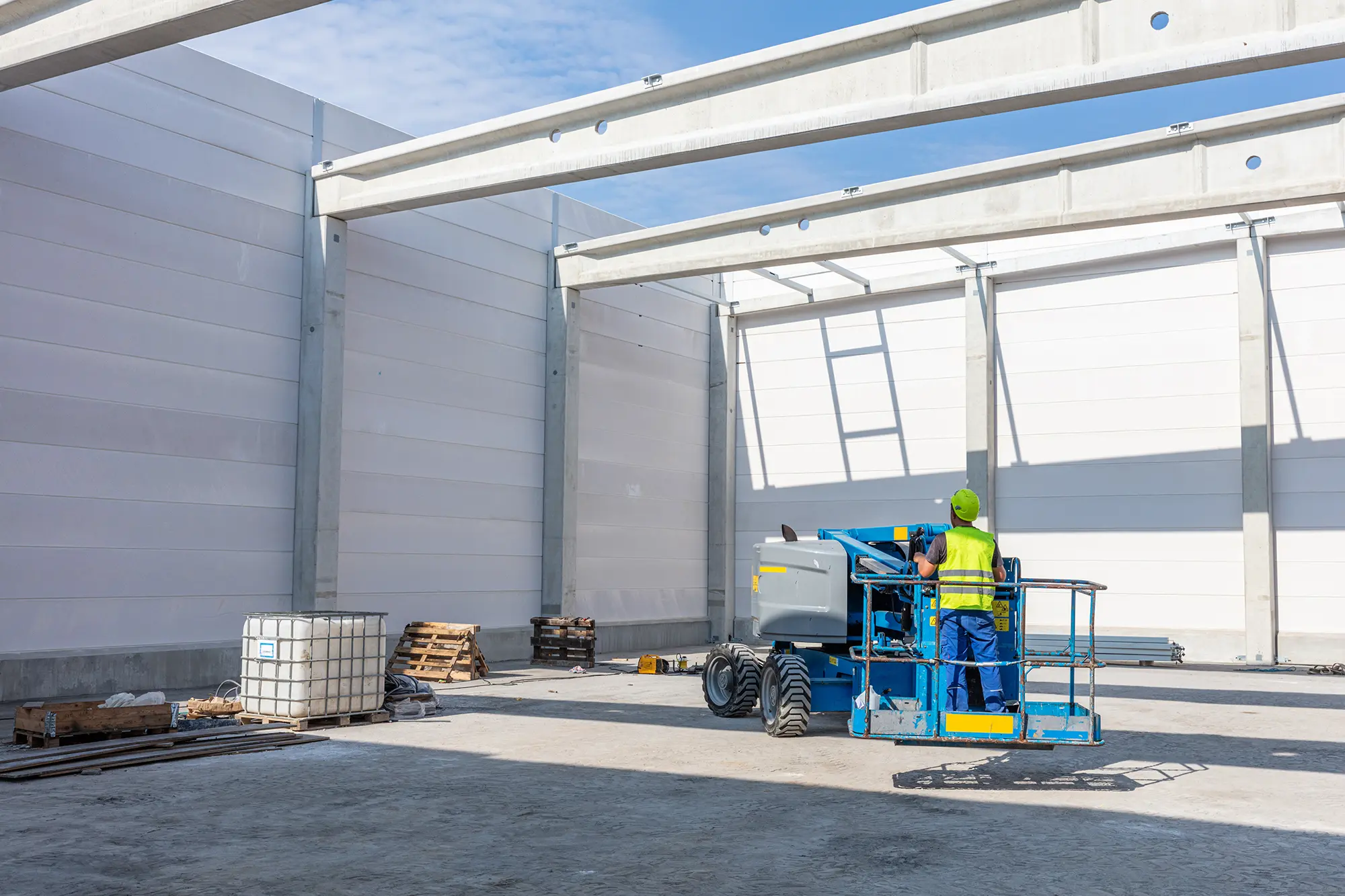
Sub-zero freezer storage adjacent to active blast freezer cell
System Types

Tunnel, spiral, plate, IQF, batch — each defined and priced.

Five common blast freezer system types serve different product mixes, throughput profiles, and operational constraints. Tunnel and spiral are the most common for continuous-flow operations. Plate freezers serve fish and meat-block applications. IQF serves berries, vegetables, and small protein. Batch serves variable product mix or smaller throughput.

  • Tunnel: continuous conveyor through chilled tunnel — high throughput, large footprint
  • Spiral: vertical helix conveyor — high throughput, compact footprint
  • Plate: refrigerated plates compress product blocks — fish, meat blocks
  • IQF: fluidized bed at high velocity — berries, vegetables, small protein
  • Batch: fixed room, product on racks or pallets — variable mix, lower throughput
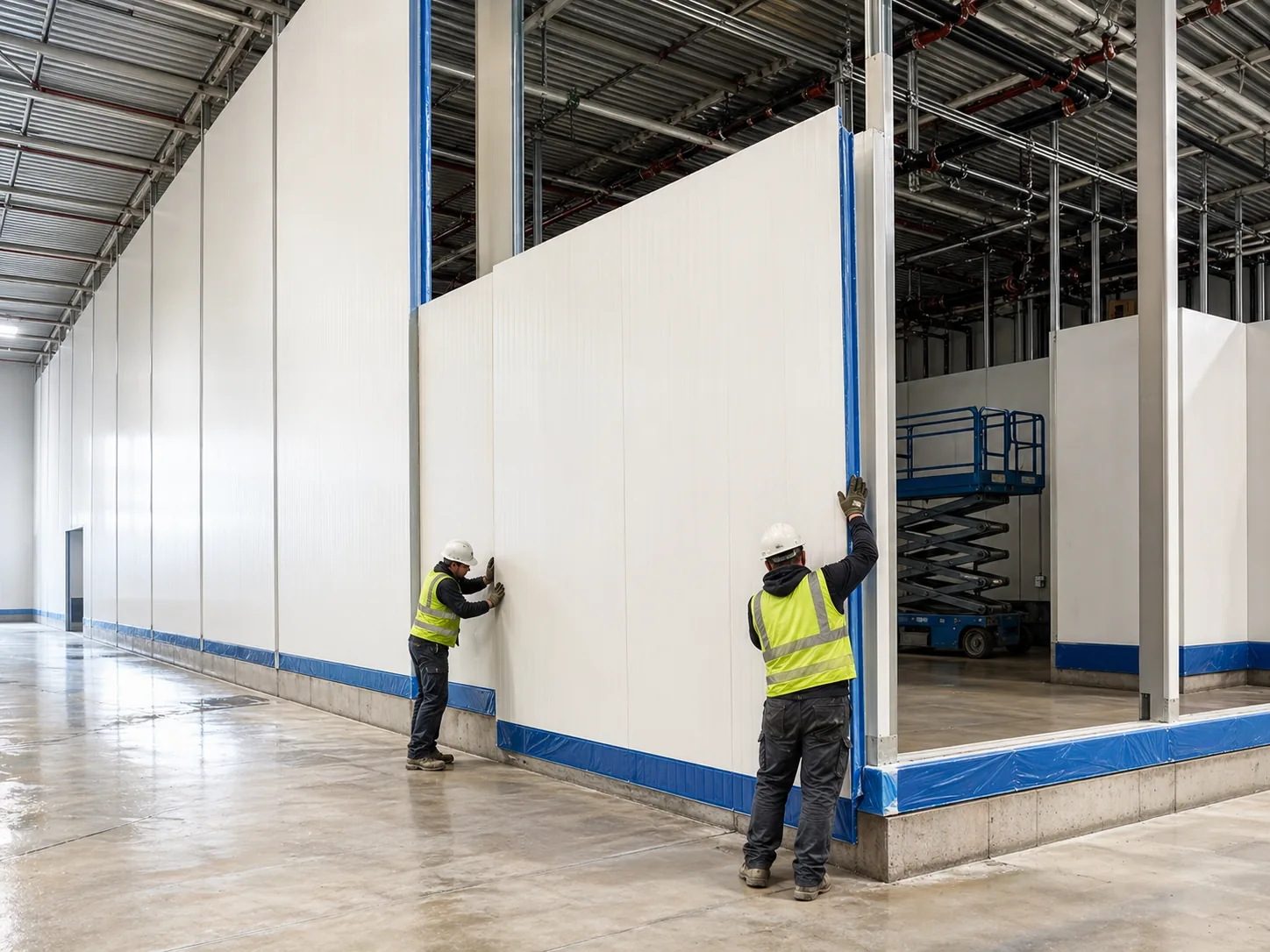
Blast freezer construction with refrigeration equipment installation
Envelope

Envelope is heavier than sub-zero storage envelope.

Blast cells run 6-8" IMP minimum, with cam-lock joints, double-gasket detail at corners, and vapor seal at every joint. Vestibule or airlock isolation between blast cell and adjacent storage is standard. The envelope cost premium over standard sub-zero storage is real and worth it — envelope failure in a blast cell shows up as ice growth, door failure, and lost throughput within months.

  • IMP thickness: 6-8" minimum, sometimes specialty multi-layer
  • Cam-lock joints with double-gasket detail at all corners
  • Continuous vapor seal at every joint, structural transition, and penetration
  • Vestibule or airlock isolation between blast cell and adjacent storage
  • Specialty doors with heavy seals and rapid-cycle hardware
Heavy IMP envelope construction for blast freezer application
Cost

Blast freezer cost ranges by scope

Blast freezer cost depends entirely on whether the project includes only the blast cell, the surrounding sub-zero storage, or both. The table below shows 2026 ranges by scope component.

Scope2026 Cost / SFNotes
Sub-zero storage adjacent to blast (-10°F to -20°F)$260-$340Standard sub-zero envelope and refrigeration
Active blast cell (-30°F to -40°F operating)$400-$700+Heavy refrigeration, IMP, air handling, controls
Whole-facility blended (storage + blast)$280-$350Blast cell at 5-10% of total facility area
Frozen processing facility (process + blast + storage)$320-$420Includes USDA-FSIS process scope
IQF system installation (equipment-led)VariableEquipment cost dominates; building scope smaller

What drives the high-end of active blast cell cost

  • Ammonia/CO2 cascade plant: $40-$120 per ton refrigeration capacity, sized to pull-down
  • Evaporator coil count and air handling: high-velocity, multi-coil array
  • Heavy IMP envelope: 6-8" minimum, specialty joints and seals
  • Vestibule or airlock with double-door interlock
  • Heated underslab system sized for deep sub-zero
  • Specialty doors, defrost integration, controls integration
  • Commissioning and pull-down verification
System Types

Tunnel, spiral, plate, IQF, batch — defined and priced

Tunnel blast freezer

Product moves through a long, narrow chilled tunnel on conveyor. High throughput, large building footprint, fixed product flow direction. Common for protein processing lines, prepared foods, and high-volume continuous operations. Building cost runs at the lower end of active blast range because the tunnel is purpose-built equipment; construction primarily delivers the building shell around it. Typical equipment+building cost: $450-$700/SF in the tunnel area, lower at the line ends.

Spiral blast freezer

Conveyor wraps in a vertical helix, achieving long product residence time in a compact building footprint. Standard for bakery, protein patties, prepared meals, and applications constrained by floor area. Higher equipment cost than tunnel; lower building cost because the spiral fits in a smaller room. Typical equipment+building cost: $500-$700+/SF in the spiral area.

Plate freezer

Product is loaded between refrigerated horizontal or vertical plates that clamp the product and conduct heat directly. Standard for fish blocks, seafood, meat blocks, and other applications where product geometry suits the format. Building scope is modest; equipment is specialty. Typical building cost around the plate freezer: $400-$550/SF.

IQF (individually quick frozen)

Product is fluidized on a perforated belt at very high air velocity (often 1,500-2,500 FPM), freezing each piece individually without clumping. Standard for berries, vegetables, shrimp, small protein pieces. Equipment cost dominates the budget; the building delivers a refrigerated enclosure and the air handling backbone. Total installed cost varies widely by line throughput.

Batch blast freezer

Fixed room loaded with product on pallets or racks; entire room is pulled down over hours per cycle. Lower throughput per square foot than continuous systems; suitable for variable product mix, smaller operations, or pull-down of mixed pallets. Typical building cost: $400-$600/SF for the batch cell.

Cryogenic blast (LN2 or CO2)

Liquid nitrogen or CO2 spray for ultra-rapid freezing. Equipment cost is moderate, building cost is lower than mechanical blast (no refrigeration plant), but operating cost (consumable gas) is high. Used for premium product where mechanical pull-down rate is insufficient, or for low-throughput specialty applications.

Refrigeration

Refrigeration plant sizing differential (3-5x explained)

The single most important number in blast freezer cost engineering is the refrigeration load. A blast cell's evaporator capacity per SF can be 3-5x the equivalent load in a storage freezer of the same area, because the design case is pull-down rate, not hold load.

Load comparison: storage vs blast

A 5,000 SF sub-zero storage room at -10°F has a refrigeration load roughly equal to envelope + door cycle + lighting + defrost — maybe 25-50 BTU/hr per SF, or 125-250 MBH total. Add 30% safety margin and round to 350-500 MBH (about 30-40 tons).

A 5,000 SF active blast cell pulling product from +35°F to -10°F core in 4-8 hours must remove 3-5 BTU per pound of product per minute over the pull-down cycle. Evaporator capacity per SF runs 80-180 BTU/hr per SF or higher — 400-900 MBH for the same 5,000 SF, or 30-75 tons. Add infiltration, defrost, air handling load, and safety margin, and the plant sizing is 60-120 tons for the same area where storage needed 30-40.

Why cascade is standard

Single-stage ammonia loses efficiency below approximately -20°F evaporator temperature. Active blast cells operate at -30°F to -40°F evaporator. Ammonia/CO2 cascade systems run ammonia on the high side and CO2 on the low side, recovering efficiency at deep sub-zero. The first-cost premium versus single-stage ammonia is real (10-25% higher); the operating-cost benefit pays back across the life of the plant. New blast facilities are almost universally cascade.

Air handling

Blast freezing is air-velocity dependent. Heat transfer at the product surface scales roughly with the 0.6 power of air velocity. Active blast cells use multi-coil evaporator arrays, high-static-pressure fans, and engineered duct/baffle systems to achieve 1,200-2,500+ FPM at the product surface. Air handling install is its own trade-craft and adds material cost and commissioning time.

Defrost

Blast cells defrost more frequently than storage. Defrost cycle planning, evaporator splitting, hot-gas defrost integration, and drain heater design all affect both refrigeration efficiency and product impact. Defrost design errors show up as ice accumulation, fan failure, and unplanned pull-down outages within the first year.

Compliance

Compliance: PSM, USDA-FSIS, HACCP, and product-specific overlay

Blast freezer facilities trigger an unusually heavy compliance overlay because they typically combine industrial-scale ammonia, food processing, and product-specific requirements.

Ammonia compliance (PSM/RMP)

Ammonia/CO2 cascade plants for blast freezing routinely exceed 10,000 lb ammonia charge, triggering OSHA PSM 29 CFR 1910.119 and EPA RMP 40 CFR 68. Scope includes process hazard analysis, operating procedures, training, mechanical integrity, management of change, pre-startup safety review, emergency planning, compliance audits every three years, and incident investigation protocols. IIAR-2 and IIAR-9 govern design and operation specifications. PSM compliance adds 3-7% to project cost and ongoing operational burden.

USDA-FSIS (for protein)

Blast freezer projects handling protein under USDA-FSIS jurisdiction must build to FSIS sanitary design standards — sloped floors with drains, sanitary wall details, cleanable finishes, segregated raw-to-cooked flow if applicable, and inspection access. FSIS plan approval is part of the permitting path. Learn more about frozen food manufacturing.

HACCP, SQF, BRC

Product-quality and food-safety certification frameworks layer on top of regulatory requirements. HACCP is fundamental; SQF and BRC certification add documentation, physical security, traceability, and operational controls. These should be specified in pre-construction so the building supports the operational requirements.

Building code and energy code

IBC, IECC, ASHRAE 90.1, NFPA standards, and local amendments all apply. ASHRAE 90.1 for cold storage has specific envelope and refrigeration requirements that affect IMP thickness and equipment efficiency.

Project Approach

Project approach: pre-construction is heavier than standard cold

Blast freezer projects require heavier pre-construction than standard cold storage because the refrigeration design case, equipment specification, and compliance scope all interact. USCB's approach on blast projects:

  1. Operational profile: product mix, throughput, target pull-down time, batch vs continuous
  2. Refrigeration load calculation against pull-down case, not hold case
  3. System selection: cascade vs CO2-only vs cryogenic, with first cost and operating cost trade-off
  4. Equipment specification and early procurement release (22-30 week lead times)
  5. PSM compliance planning if ammonia charge exceeds threshold
  6. USDA-FSIS plan approval coordination if protein
  7. IMP envelope specification — 6-8" minimum, joint and vestibule detail
  8. Air handling design — evaporator array, fan sizing, ductwork, baffle layout
  9. Heated underslab system sized for deep sub-zero
  10. Commissioning plan including pull-down verification with actual product

Pre-construction for blast typically runs 4-8 weeks vs 2-4 weeks for standard cold, and the engineering hours per dollar of construction are roughly 1.5-2x.

Next Step

How to start a blast freezer project

USCB delivers a preliminary cost range and refrigeration approach within 5-10 business days from a programming conversation. Email matias@goodfortune.agency or use the form on this page. The first conversation establishes throughput, product mix, target pull-down time, batch vs continuous, and operational profile — enough to scope refrigeration plant and give a defensible $/SF range.

See also: cold storage construction cost per SF, frozen storage construction, frozen food manufacturing.

Budgeting

Cost and timeline planning ranges.

$260-$340/SF

Sub-Zero Storage

Adjacent to blast cell, -10°F to -20°F

$400-$700+/SF

Active Blast Cell

-30°F to -40°F, 3-5x refrigeration of storage

$280-$350/SF

Blended Facility

Blast cell at 5-10% of facility area

$320-$420/SF

Frozen Processing

Process + blast + storage, USDA-FSIS

Cascade NH3/CO2

Refrigeration Plant

$40-$120 per ton, lead 22-30 weeks

12-20 months

Timeline

Long-lead equipment dominates schedule

Services

Cold Storage Solutions, End to End

❄️ Cold Storage🧊 Blast Freeze🏗️ New Build🔧 Retrofit🌡️ Multi-Temp💊 Pharma-Grade📦 3PL Warehouses
FAQ

Blast Freezer Cost FAQs

How much does a blast freezer cost to build?

Blast freezer construction cost depends on whether the scope is the blast cell itself, the surrounding sub-zero storage, or both. Sub-zero storage adjacent to a blast operation runs $260-$340/SF in 2026. Active blast cells (the room where rapid pull-down occurs) run $400-$700+/SF because of dramatically higher refrigeration capacity per square foot, heavier IMP, and specialty air handling. A typical 50,000 SF frozen processing facility with a 4,000 SF blast cell and 46,000 SF sub-zero storage lands around $280-$350/SF blended.

Why does a blast freezer need so much more refrigeration than storage?

A storage freezer holds product at temperature; refrigeration only offsets envelope, door, lighting, equipment, and defrost load. A blast freezer pulls hot product down to frozen temperature in hours, which requires removing the latent heat of freezing plus the sensible heat at high rate. Refrigeration capacity per square foot in an active blast cell is typically 3-5x the capacity required for storage freezer of the same area. This is why blast cells are usually small, dedicated rooms inside larger frozen facilities rather than the whole facility.

What are the main blast freezer system types?

Five common types: (1) tunnel — product moves on conveyor through a long, narrow chilled tunnel; (2) spiral — conveyor wraps in a vertical helix for compact footprint; (3) plate — product clamped between refrigerated plates, used for fish and meat blocks; (4) IQF (individually quick frozen) — product on fluidized bed or belt at very high air velocity, for berries, vegetables, small protein; (5) batch — product loaded into a fixed room and frozen on racks or pallets. Each has distinct construction cost, refrigeration sizing, and operational profile.

What refrigeration system is used for blast freezing?

Ammonia/CO2 cascade is the standard for new blast freezing installations at industrial scale. Single-stage ammonia loses efficiency below -20°F evaporator temperature, and cascade systems run ammonia on the high side and CO2 on the low side, achieving better efficiency at deep sub-zero. CO2-only transcritical systems are used in jurisdictions phasing down ammonia. DX systems are practical only for small blast cells.

What temperature does a blast freezer operate at?

Active blast cells operate at -30°F to -40°F air temperature, with high air velocity (typically 1,200-2,500 FPM at the product surface) to drive rapid heat transfer. Surrounding sub-zero storage typically holds at -10°F to -20°F. The temperature gradient between blast cell and storage is one of the design challenges — vestibule or airlock isolation is required to prevent moisture migration and refrigeration penalty.

How long does blast freezer construction take?

Blast freezer projects run 12-20 months from contract to commissioning. The schedule is dominated by long-lead refrigeration equipment (ammonia/CO2 cascade packages run 22-30 weeks) and switchgear (30-50 weeks). Construction sequence on the blast cell itself is similar to a sub-zero room — IMP envelope, heated underslab, refrigeration plant, controls, commissioning — but the equipment specification, install precision, and commissioning effort are all heavier.

Do I need a specialty engineer for a blast freezer project?

Yes. Blast freezer design requires refrigeration engineers with sub-zero and rapid-freeze experience. Load calculation is fundamentally different from storage freezer because the design case is pull-down rate, not hold load. Equipment selection, evaporator sizing, defrost cycle planning, and airflow design all require specialty expertise. USCB's pre-construction process includes refrigeration engineering on blast freezer projects from day one.

Can I retrofit a freezer storage room into a blast freezer?

Almost never. The refrigeration plant, electrical service, evaporator capacity, air handling, and slab system are all different by orders of magnitude. A freezer storage room rebuilt as an active blast cell typically requires gutting the refrigeration and air systems, increasing electrical service, upgrading IMP thickness, and revising controls — at which point ground-up new construction is usually competitive. Where retrofit makes sense is converting a freezer storage area to receive a packaged blast cell delivered as a manufactured unit.

What compliance applies to blast freezer projects?

Blast freezer facilities typically trigger USDA-FSIS (if protein), HACCP, FDA 21 CFR 117 (if food), and the full ammonia compliance stack if ammonia charge exceeds threshold — IIAR-2, IIAR-9, ANSI/ASHRAE 15, OSHA PSM 29 CFR 1910.119, EPA RMP 40 CFR 68. Ammonia/CO2 cascade systems frequently exceed PSM thresholds because of the ammonia high-side charge. PSM scope adds engineering, training, mechanical integrity, and audit burden that affects both construction and ongoing operations.

How do I budget a blast freezer project?

Separate the budget into three buckets: (1) sub-zero storage area at $260-$340/SF; (2) active blast cell at $400-$700+/SF; (3) shared infrastructure (machine room, electrical service, dock face, controls) at facility-wide cost. USCB delivers a preliminary cost range within 5-10 business days from a programming conversation that establishes throughput, product mix, target pull-down time, and operational profile. Email matias@goodfortune.agency to start.

Field Log· Houston · 29.66°N · 95.47°WOperating Range−40°F → 70°F · ±0.5°FR-Value30–60 IMP
Call UsRequest a Quote