Frozen Food Manufacturing Facility Construction

Frozen food manufacturing is one of the most demanding cold storage construction categories. A frozen food manufacturing facility integrates raw material receiving and storage, processing operations at controlled temperatures, blast freezing of finished product, packaging operations, and finished goods frozen storage — all within a single facility, all coordinated for cold chain integrity from receiving through shipping. USCB delivers frozen food manufacturing construction nationwide, with experience across protein processing, frozen meals, ice cream, frozen bakery, and frozen produce manufacturing.

By US Cold Storage Builders Engineering Team
📅 Now booking 60–90 days out | Call (346) 676 - COLD
Performance IndexUpdated quarterly
3–5x
Blast Refrigeration vs Storage Per SF
$230–$320/SF
Combined Processing + Storage
12–18 mo
Construction Timeline
USDA-FSIS
Pre-Op Inspection Coordinated
Frozen Food Manufacturing

Seven requirements that distinguish frozen food manufacturing facilities.

What's Demanded

Production-to-storage cold chain integrity.

Product moves from receiving through processing through blast freezing through finished storage. Temperature integrity must be maintained throughout. Multiple zones with airflow separation. Sanitary construction from receiving through shipping. Blast freezing refrigeration capacity 3–5x larger per SF than equivalent storage freezer. Processing equipment integrated with building. Multi-shift, sometimes around-the-clock production. USDA-FSIS or FDA regulatory framework.

  • Integrated production-to-storage cold chain
  • Multiple temperature zones (receive / process / blast / store)
  • Sanitary construction throughout — receiving to shipping
  • Blast freezing capacity 3–5x larger refrigeration per SF
  • Processing equipment integration from pre-construction
  • Multi-shift, sometimes 24/7 production
  • Compliance depth (USDA-FSIS, HACCP, SQF, BRC, retailer programs)
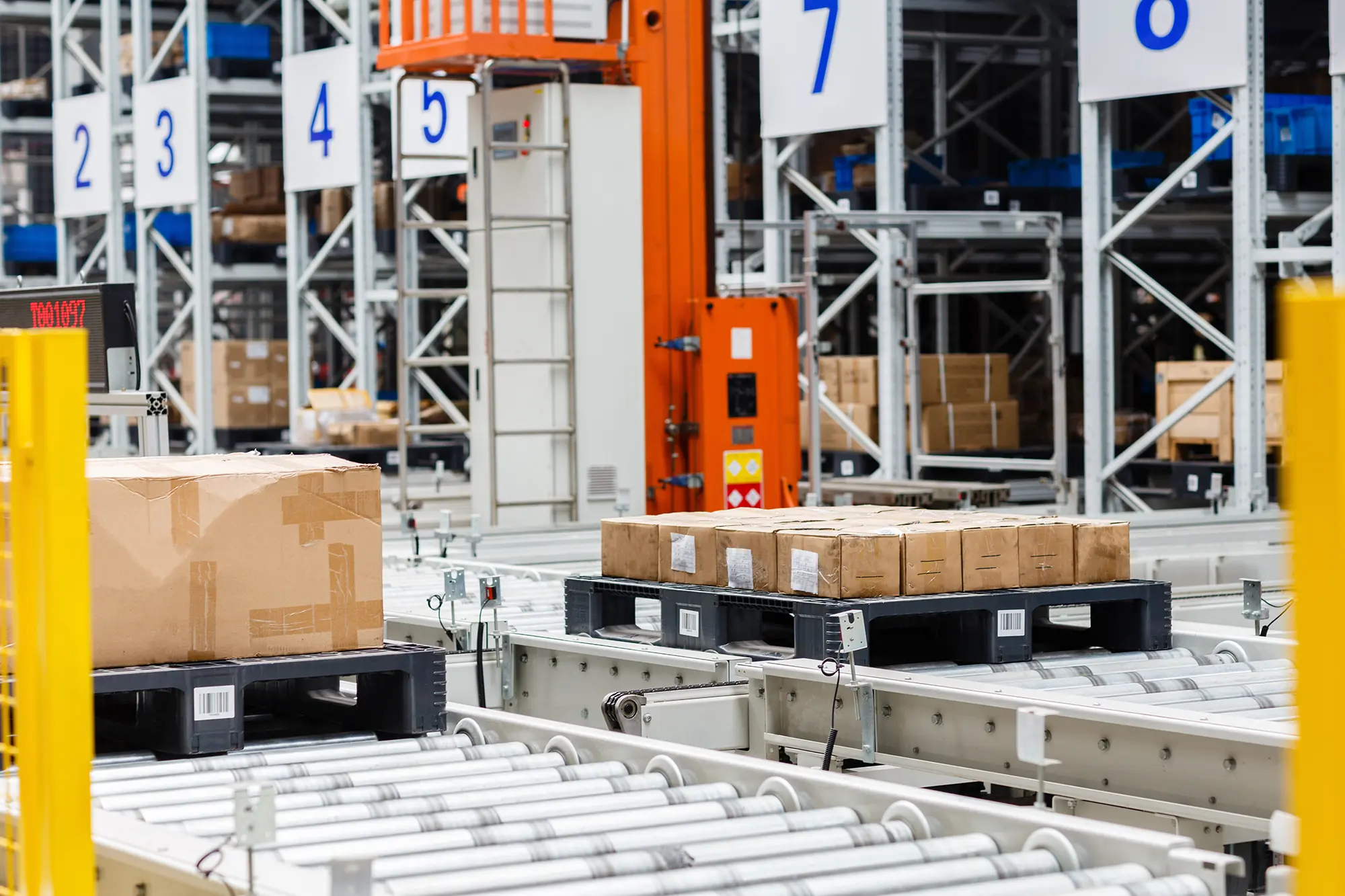
Frozen food manufacturing line with automated boxes on pallet conveyor
Multi-Zone Refrigeration

Five zones, one coordinated plant.

Raw material receiving at 35°F–45°F. Processing at 40°F–50°F (or cooler for some operations). Blast freezing at -20°F to -40°F. Packaging at 35°F–45°F. Finished goods storage at -10°F to 0°F. Each zone refrigeration coordinates with shared plant where possible; dedicated cascade refrigeration for blast freezing.

  • Receiving (35°F–45°F) — refrigerated, shared plant
  • Processing (40°F–50°F) — sanitary refrigerated zone
  • Blast freezing (-20°F to -40°F) — dedicated cascade
  • Packaging (35°F–45°F) — refrigerated zone
  • Finished storage (-10°F to 0°F) — frozen, shared plant
  • Airflow separation between raw and finished zones
Frozen food manufacturing facility blast freezer with cascade refrigeration
Sanitary Build

USDA finishes from receiving to shipping.

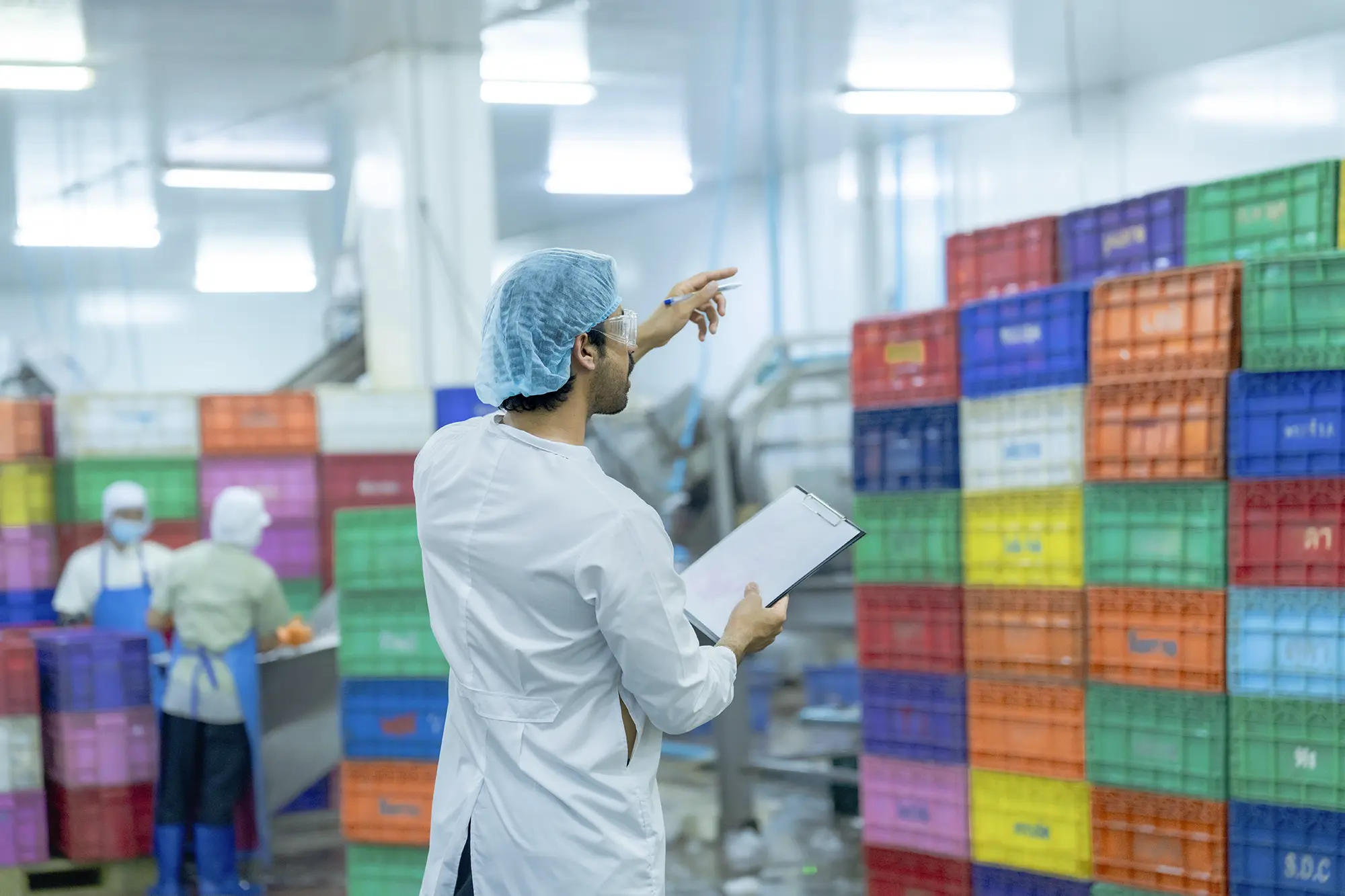
FRP wall panels in process areas. Sealed slope-to-drain concrete flooring. Coved base transitions at every wall-to-floor and wall-to-wall interface. Sanitary penetration sealing. USDA-compliant lighting (washdown-rated, IP69K). Sanitary stainless steel detailing. Cleanability around production equipment is engineered, not accommodated.

  • FRP wall panels in all process areas
  • Sealed slope-to-drain flooring 1/8"–1/4" per foot
  • Coved base transitions at every interface
  • Sanitary penetration sealing throughout
  • USDA-compliant washdown-rated lighting
  • Cleanability designed around production equipment
Frozen food manufacturing operations with USDA sanitary finishes
Type 01

Protein Processing and Freezing

Operations: Meat, poultry, seafood processing. Slaughter or further processing. Blast freezing of finished product.

Buyers: Tyson, JBS, Pilgrim's Pride, Smithfield, Cargill, regional processors, specialty protein operators (organic, grass-fed, halal, kosher).

Construction: USDA-FSIS throughout. Raw/finished zone separation. FRP, slope-to-drain, coved transitions. Ammonia/CO2 cascade refrigeration for blast freezing. Integrated material handling.

Type 02

Frozen Meals and Prepared Foods

Operations: Meal preparation, cooking, portioning, packaging, blast freezing, finished storage.

Buyers: Nestlé/Stouffer's, Schwan's, ConAgra, Pinnacle, Lean Cuisine, regional manufacturers, meal kit producers, foodservice prepared meal manufacturers.

Construction: Multi-zone processing with temperature differences between zones. Blast freezing sized for batch operations. Finished frozen storage. Integrated packaging.

Type 03

Frozen Bakery and Snacks

Operations: Mixing, fermentation, baking, freezing, packaging.

Buyers: Frozen bakery manufacturers (par-baked, frozen dough), frozen pastry, frozen snack manufacturers.

Construction: Processing zones at varied temperatures (mixing cool, fermentation controlled, baking). Blast or spiral freezing for finished product. Dry mixing operations integrated with frozen storage.

Type 04

Ice Cream Manufacturing

Operations: Mix preparation, pasteurization, freezing, hardening, packaging, finished storage.

Buyers: Unilever, Nestlé, regional brands, private label manufacturers, specialty operators (premium, organic, gelato).

Construction: Sanitary detailing throughout (FDA Pasteurized Milk Ordinance for fluid mix). Hardening tunnels for finished product. Finished frozen storage at -10°F to -20°F. Integrated material handling.

Type 05

Frozen Produce and IQF

Operations: Receiving, washing, sorting, blanching, IQF freezing, packaging, finished storage.

Buyers: Frozen produce manufacturers (regional and major), specialty IQF operators (organic, premium).

Construction: IQF tunnel or spiral systems for individual quick freeze. Controlled airflow for separation during freezing. Sanitary detailing throughout. Finished frozen storage.

Type 06

Seafood Processing and Freezing

Operations: Receiving (often refrigerated), processing (cutting, portioning, packaging), blast or plate freezing, finished storage.

Buyers: Seafood processors (regional, major), specialty operators (sustainable, certified, organic), retail private label.

Construction: USDA-FSIS coordination for shellfish (state-regulated). Sanitary detailing. Blast freezing. Sometimes plate freezing for premium. Finished storage -10°F to -20°F.

Equipment

Processing equipment integration

  • Conveyors, sortation, packaging lines coordinated with building structure
  • Equipment foundations and tie-downs designed in
  • Utility connections (electrical, water, compressed air, steam if applicable)
  • Cleanability around equipment engineered, not retrofitted
  • Maintenance access planned at design
Flow Engineering

Building layout for product flow

Receiving → raw storage → processing → blast freezing → packaging → finished storage → shipping. No cross-contamination between zones. Efficient material handling. Personnel flow separated from product flow. Airflow separation between raw and finished. The building geometry follows the cold chain.

Compliance

USDA-FSIS, FDA, HACCP, SQF/BRC, AIB

  • USDA-FSIS facility standards (9 CFR 416) — pre-operational inspection
  • FDA 21 CFR 117 GMP for human food
  • HACCP plan
  • SQF, BRC retailer supplier programs
  • AIB for bakery
  • FDA Pasteurized Milk Ordinance for dairy
  • State-specific food processing requirements
Planning Ranges

Reference ranges and key figures.

$230–$320/SF

Combined Processing + Storage

Baseline construction

+$15–$30/SF

Sanitary Finish Premium

Throughout facility

3–5x

Blast Refrigeration vs Storage

Refrigeration tonnage per SF

12–18 mo

Construction Timeline

Ground-up

8–14 mo

Retrofit Timeline

Existing food facility conversion

30–90 days

Ramp-Up Window

After substantial completion

Services

Cold Storage Solutions, End to End

❄️ Cold Storage🧊 Blast Freeze🏗️ New Build🔧 Retrofit🌡️ Multi-Temp💊 Pharma-Grade📦 3PL Warehouses
FAQ

Common Questions

What makes frozen food manufacturing construction different from other cold storage?

Integration of multiple temperature zones (refrigerated, processing, blast freezing, storage) in a single facility with airflow separation, sanitary detailing throughout, processing equipment integration, blast freezing capacity sized for production throughput (3–5x larger refrigeration per SF than storage), and USDA-FSIS or FDA regulatory framework.

What's the typical cost for frozen food manufacturing construction?

$230–$320/SF for combined processing and storage. Higher for blast freezing-intensive operations or specialty processes. Sanitary finishes throughout add $15–$30/SF over baseline. USDA-FSIS facilities run premium over FDA-only facilities.

How does USCB integrate processing equipment with construction?

Pre-construction includes processing equipment coordination. Equipment specifications, foundations, utility requirements, and cleanability detailing developed during design development. Construction sequencing accommodates equipment installation.

Can existing food facilities be converted to frozen food manufacturing?

Yes, with feasibility evaluation. Existing structural capacity for refrigeration loads, electrical service for blast freezing plant, slab condition for sanitary operations, and ceiling clear for racking and equipment all need evaluation. Conversion often less expensive than ground-up.

Do you handle multiple production lines in one facility?

Yes. Multi-line facilities coordinate building structure, refrigeration, and processing equipment for parallel operations. USCB has experience with multi-line facility projects.

How long does frozen food manufacturing construction take?

12–18 months typical for ground-up construction. Variation by facility complexity, blast freezing capacity, processing equipment integration. Retrofits run 8–14 months.

What's the operational ramp-up after construction?

Typically 30–90 days for ramp-up after substantial completion. USDA-FSIS pre-operational inspection coordinates with operations launch. Tenant onboarding (if applicable) during ramp-up.

Do you build food-grade IQF facilities specifically?

Yes. IQF tunnel or spiral systems integrate with building design. USDA-FSIS compliance throughout for IQF operations.

Field Log· Houston · 29.66°N · 95.47°WOperating Range−40°F → 70°F · ±0.5°FR-Value30–60 IMP
Call UsRequest a Quote