Cold Storage Retrofit Cost (Box-in-Box Conversion)

Cold storage retrofit typically runs 10-20% below ground-up when the existing shell supports the cold load. This page details the site evaluation framework USCB uses to qualify candidate shells, the ground-up versus retrofit decision rules, and a retrofit timeline comparison — anchored on the We Store Frozen Houston reference project.

By US Cold Storage Builders Engineering Team
📅 Now booking 60–90 days out | Call (346) 676 - COLD
Performance IndexUpdated quarterly
10-20%
Typical Below Ground-Up
6-12 mo.
Retrofit Timeline
5 criteria
Site Evaluation Gates
Retrofit Cost & Feasibility

Retrofit savings depend entirely on shell quality.

When Retrofit Wins

A sound Class A shell is the precondition for retrofit savings.

The 10-20% retrofit savings come from avoiding site work, foundation, structural steel, and roofing. Those buckets represent 25-40% of ground-up cost. Retrofit captures most of that, then re-spends on slab repair, structural reinforcement, electrical upgrade, and dock rework — to the extent the shell requires it. The cleaner the shell, the bigger the net savings.

  • Slab condition (sound, freezer-capable or repairable)
  • Structural capacity (handles IMP, racking, refrigeration)
  • Clear height (28' refrigerated, 32'+ frozen, 36'+ tall-rack)
  • Electrical service (2,000A 480V minimum, plus refrigeration capacity)
  • Dock face (usable door count, clear apron, truck circulation)
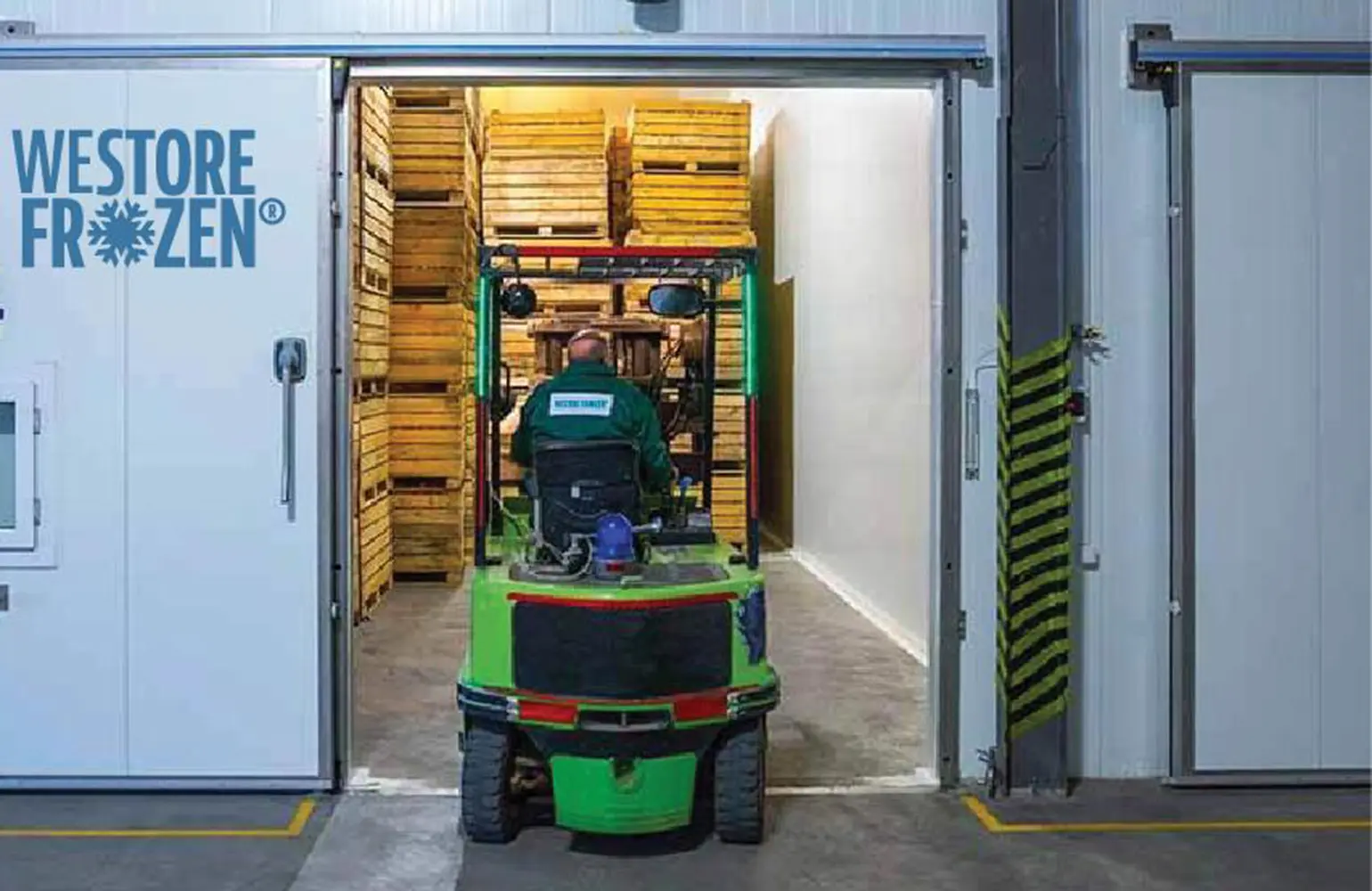
We Store Frozen Houston cold storage retrofit reference project exterior
Site Evaluation

USCB site evaluation delivers build/no-build before contract.

Before any design fee is spent, USCB performs a 2-3 week site evaluation that reaches a defensible build/no-build recommendation, preliminary cost range, and identified risk items. For buyers still shopping shells, the evaluation runs on candidate buildings before purchase. This frequently prevents acquiring shells that will not pencil.

  • Slab core sampling, structural review, clear-height verification
  • Electrical service capacity check, utility coordination
  • Dock face survey, truck circulation, apron condition
  • Preliminary refrigeration load calc and equipment sizing
  • Cost range and risk-item list with confidence intervals
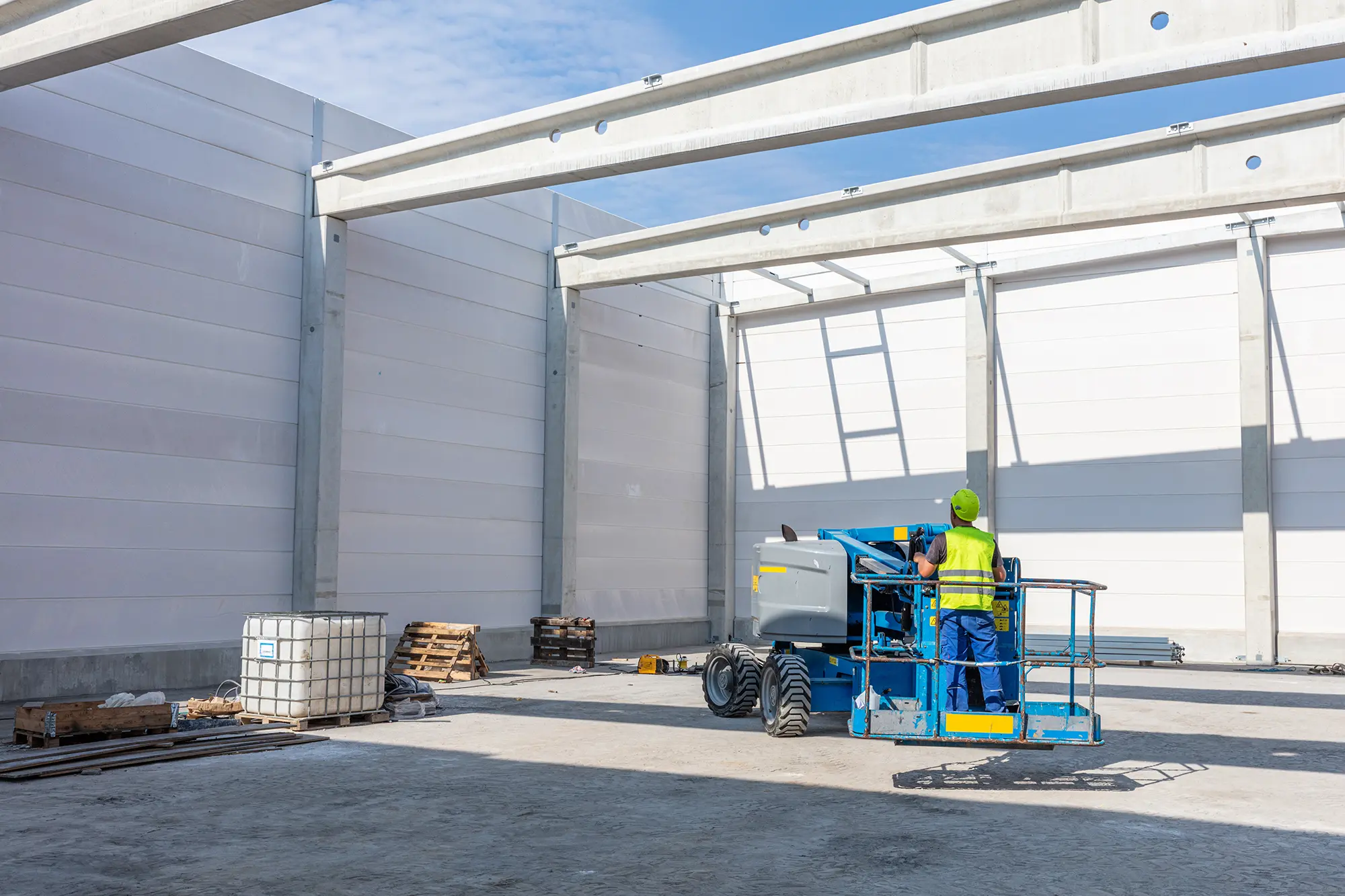
Cold storage construction worker on mobile elevating platform during retrofit work
Box-in-Box

Box-in-box: new cold envelope inside existing structure.

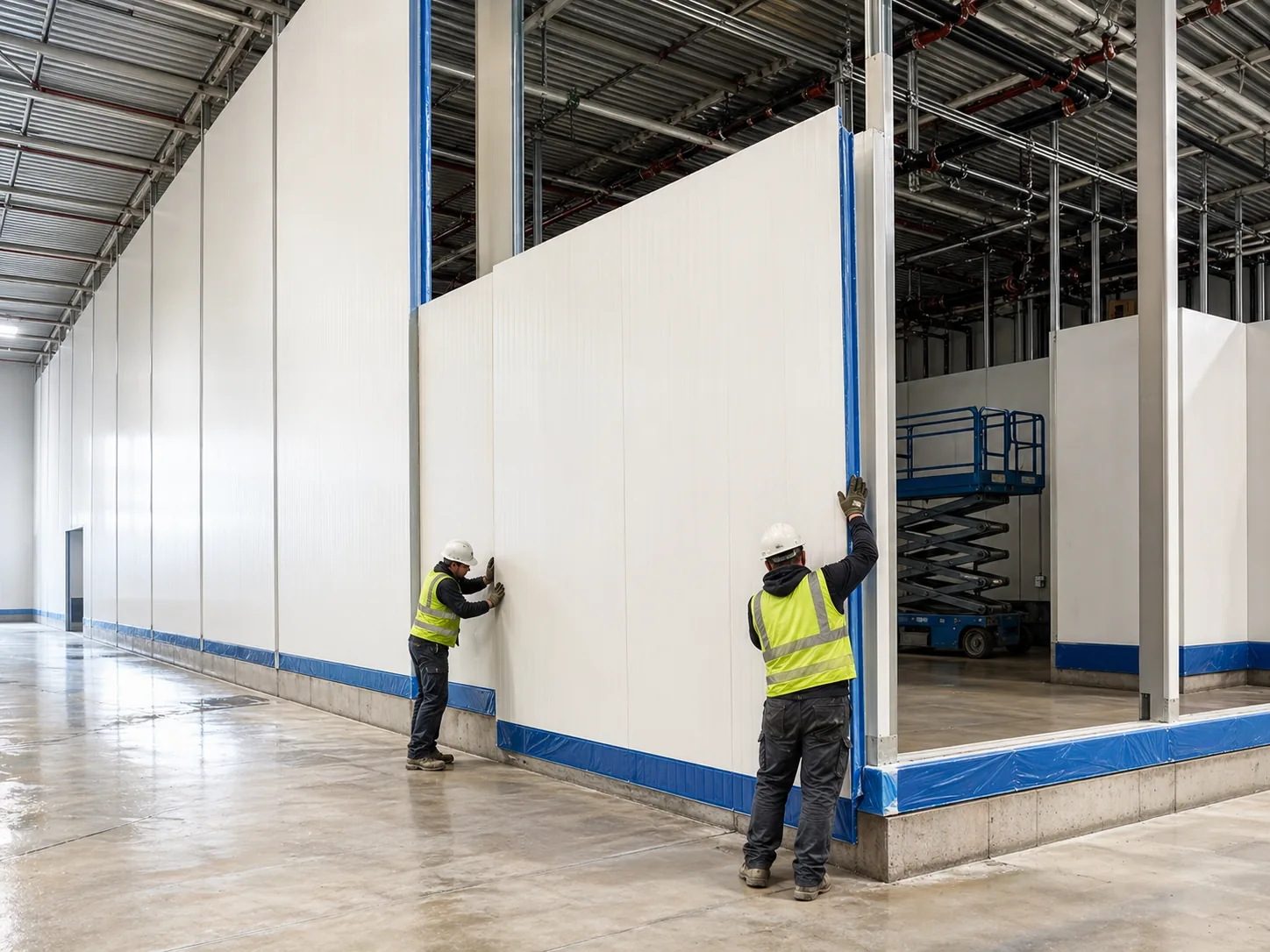
The retrofit method is straightforward in principle: build a new insulated metal panel cold envelope inside the existing dry warehouse shell, with heated underslab where temperature requires it, then install refrigeration plant, controls, dock equipment, and racking. The thermal envelope is independent of the structural envelope except at engineered thermal-break penetrations.

  • New IMP walls and ceiling sized to target temperature
  • Continuous vapor barrier, sealed penetrations
  • Heated underslab system installed in freezer zones
  • Refrigeration plant, piping, evaporators per load
  • Refrigerated overhead doors, levelers, seals, vestibules at dock face
Insulated metal panel installation inside cold storage retrofit
Cost

Retrofit cost ranges and where the savings come from

Retrofit cost is built on the same line items as ground-up minus the line items the existing shell already provides. The table below shows ground-up versus retrofit ranges by target facility type at 2026 pricing.

Target FacilityGround-Up $/SFRetrofit $/SFTypical Savings
Refrigerated 34°F-55°F$155-$215$130-$19010-15%
Multi-temp DC$220-$295$185-$26012-18%
Frozen 0°F to -10°F$200-$280$170-$24015-20%
Blast / sub-zero$260-$340$220-$29513-17%
Pharma GMP 2°C-8°C$280-$400+$245-$35510-15%

Where the savings come from

  • Site work avoided: $8-$22/SF
  • Foundation avoided: $8-$18/SF (assuming existing slab and footings are reusable)
  • Structural steel avoided: $18-$32/SF
  • Roofing avoided or partial: $6-$14/SF
  • Total avoided cost: $40-$86/SF on a clean Class A shell

Where the savings get spent back

  • Slab repair or supplemental pour for freezer underslab: $8-$25/SF
  • Structural reinforcement for IMP, racking, or refrigeration: $4-$18/SF
  • Electrical service upgrade and re-feed: $3-$12/SF
  • Dock face rework or door addition: $4-$15/SF per dock face
  • Asbestos, hazmat, or environmental remediation: variable
  • Roof repair, replacement, or insulation upgrade: $4-$14/SF if needed

Net savings on a clean shell are usually 10-20%. Net savings on a marginal shell can shrink to 0-5% or, in pathological cases, retrofit can exceed ground-up. The site evaluation is the difference between knowing this before purchase and discovering it during construction.

Site Evaluation

Site evaluation checklist: slab, structure, electrical, ceiling, dock

Five gating criteria decide whether a shell qualifies for retrofit. USCB's site evaluation works through all five with quantified scoring. The narrative below describes what to look for and what disqualifies a shell.

1. Slab condition and freezer capability

For refrigerated retrofit (34°F-55°F), an existing slab in good condition (no major cracking, no significant spalling, FF/FL within manual fork truck tolerance, drainage slope acceptable for the application) is usually reusable as-is. Slab repair is local and cost-bounded.

For freezer retrofit (below 28°F), the existing slab almost never works as-is. Freezer slabs require sub-slab insulation, vapor barrier, and a heated underslab system (glycol or electric) to prevent frost heave. Three options: (1) over-pour a new freezer slab on top of existing — adds cost, loses clear height, requires structural review of the additional dead load; (2) demo and re-pour the affected area — most common for converting a section of a larger building; (3) accept refrigerated-only retrofit. The slab decision often drives the entire retrofit math.

2. Structural capacity

The existing structure must support new dead loads (IMP ceiling, refrigeration piping and evaporators, sprinkler), live loads (racking, mezzanine), and lateral loads (no significant addition typically). A structural engineer reviews drawings if available and performs field measurement and analysis if not. Common findings: roof framing undersized for IMP ceiling and evaporators, requiring reinforcement; column or foundation capacity acceptable but at margin; lateral system acceptable for the conversion.

3. Clear height

After IMP ceiling, refrigeration, sprinkler, and lighting deductions, usable storage clear height is typically 4-6' below the existing shell clear. A 32' shell yields roughly 27-28' usable; a 36' shell yields roughly 31-32' usable. Refrigerated facilities work at 28' usable minimum for selective racking. Frozen facilities prefer 32'+ for efficient tall-rack. AS/RS or narrow-aisle facilities want 36'+ usable. Shells with clear height below the application target either require demolition of partial structure or fail the evaluation.

4. Electrical service

A typical 100,000 SF cold storage facility requires 2,000-3,000A at 480V three-phase. Pharmaceutical and AS/RS facilities can run higher. Existing service in a dry warehouse is frequently 800-1,200A — adequate for ambient operations but undersized for refrigeration plant. The upgrade path is utility coordination, new service entrance, new switchgear, and re-feed. Switchgear lead time (30-50 weeks) frequently controls the retrofit schedule.

5. Dock face

Cold storage retrofits convert dry dock doors to refrigerated doors (insulated, sealed, with thermal breaks), add levelers, dock seals or shelters, and high-speed roll-up interior doors. Existing dock count must align with cold operation throughput. Refrigerated facilities target 1 dock per 8,000-12,000 SF. Cross-dock or high-cycle operations target 1 per 4,000-6,000 SF. Shells with insufficient dock count require cutting new openings, which is feasible but adds cost and lateral structural review.

Decision Framework

When retrofit makes sense vs when ground-up does

The retrofit-versus-ground-up decision should rest on the site evaluation, not on a broker's preference or the relative purchase price of the shell. The framework below summarizes when each path typically wins.

Retrofit wins when

  • Class A shell, less than 15 years old, sound condition
  • Site evaluation passes all five gating criteria with limited remediation
  • Land acquisition in the target metro is expensive, slow, or constrained
  • Speed-to-market is critical and 4-6 months saved matters
  • Operator is comfortable with the location and dock face
  • Existing utilities (water, sewer, gas, electrical service) are present and adequate
  • Target temperature is refrigerated or freezer with a workable slab path

Ground-up wins when

  • Site evaluation flags multiple major gating issues
  • Slab is unsuitable for the target temperature with no acceptable repair path
  • Clear height is below the application target with no demolition option
  • Electrical service requires complete utility re-engineering
  • Dock face is poorly positioned for cold operations
  • Land is available, affordable, and well-located in the target metro
  • Long-term operations efficiency justifies fully optimized layout (AS/RS, narrow-aisle)
  • Pharmaceutical or specialty scope requires bespoke envelope, vestibules, or airlocks

Edge cases worth flagging

A slightly-marginal shell in an unrepeatable location can still be the right call once speed-to-market and land scarcity are factored in. Conversely, a clean shell in a second-tier location can be a trap if the operator needs Tier 1 access. The site evaluation gives the cost-and-schedule honesty; the location decision sits with the operator.

We Store Frozen

We Store Frozen Houston: USCB's reference retrofit

We Store Frozen Houston is USCB's reference cold storage retrofit. The project converted a Class A industrial shell into multi-temperature frozen storage with new IMP envelope, new heated underslab in freezer zones, new ammonia refrigeration plant, new dock infrastructure, and new BMS-integrated controls. See the full case study for project detail.

Why the shell qualified

  • Class A industrial shell with good structural condition
  • Slab in serviceable condition for refrigerated zones; partial demo and re-pour for freezer zones
  • Clear height adequate for selective and double-deep racking after IMP ceiling deduction
  • Electrical service supported the new refrigeration plant with a manageable upgrade
  • Dock face supported the throughput plan with limited dock-cutting

What the project added

  • Multi-zone IMP envelope sized to mixed-temperature operation
  • Heated underslab glycol loop in freezer zones
  • Ammonia refrigeration plant in dedicated machine room, sized to load
  • Refrigerated overhead doors, dock seals, levelers, vestibules at dock face
  • BMS-integrated refrigeration controls with remote monitoring and alarm dispatch
  • Commissioning with full pull-down, temperature mapping, door-cycle recovery testing

Lessons that apply to your retrofit

Three lessons from We Store Frozen apply to virtually every retrofit. First, the site evaluation is decisive — the same project on a marginal shell would have failed the budget. Second, long-lead procurement (switchgear, refrigeration) must release in pre-construction; retrofit speed advantage disappears if equipment lead times control schedule. Third, self-perform IMP installation matters as much on retrofit as on ground-up; the envelope failure mode is identical.

Timeline

Retrofit timeline comparison

Retrofit timeline typically runs 6-12 months from contract to commissioning, versus 10-18 months for ground-up. The 4-6 month savings come from skipping site work, foundation, and structural steel — but long-lead equipment still constrains the schedule on aggressive retrofits.

PhaseGround-UpRetrofitNotes
Pre-construction / design2-4 months1-3 monthsRetrofit benefits from existing as-builts
Permitting1-4 months1-3 monthsBuilding permit, refrigeration permit, change-of-use
Site work / foundation2-4 months0Skipped on retrofit
Steel + slab1-3 months0-2 monthsSlab repair or partial re-pour only
IMP envelope2-3 months2-3 monthsSame on both
Refrigeration + electrical3-5 months2-4 monthsExisting electrical infrastructure where reusable
Dock + finish1-2 months1-2 monthsDoor conversion vs new install
Commissioning4-8 weeks4-6 weeksSmaller scope on retrofit
Total10-18 months6-12 monthsLong-lead equipment can control either

What can blow retrofit schedule

  • Switchgear lead time (30-50 weeks) if not released in pre-construction
  • Refrigeration plant lead time (18-26 weeks) if released late
  • Asbestos or environmental remediation discovered during demo
  • Structural reinforcement scope exceeding pre-construction assessment
  • Permitting variance in jurisdictions unfamiliar with cold storage change-of-use
Next Step

Site evaluation is the first step

The defensible answer to retrofit-vs-ground-up requires a site evaluation. USCB delivers a build/no-build recommendation, preliminary cost range, and identified risk items within 2-3 weeks. For buyers still shopping shells, the evaluation can run on candidate buildings before purchase — frequently saving the buyer from acquiring a shell that will not pencil.

  1. Programming conversation: operator, throughput, target temperature, throughput, timeline
  2. Site walk: physical inspection of slab, structure, ceiling, electrical, dock
  3. Slab core sampling (where freezer is target)
  4. Structural review and load analysis
  5. Electrical service capacity check and utility coordination
  6. Preliminary refrigeration load calc and equipment sizing
  7. Cost range, risk-item list, and build/no-build recommendation

Email matias@goodfortune.agency or use the form on this page to start. See also the general cold storage cost per SF page for ground-up comparison and the cold storage construction service page for USCB's broader retrofit approach.

Budgeting

Cost and timeline planning ranges.

$130-$190/SF

Refrigerated Retrofit

Clean Class A shell, refrigerated target

$170-$240/SF

Frozen Retrofit

Includes partial slab work for heated underslab

$185-$260/SF

Multi-Temp Retrofit

Mixed cooler / frozen / ambient

$245-$355/SF

Pharma Retrofit

Cleanroom + validation scope on top

$15K-$45K

Site Evaluation

2-3 week deliverable, build/no-build recommendation

6-12 months

Retrofit Timeline

4-6 month savings vs ground-up on clean shells

Services

Cold Storage Solutions, End to End

❄️ Cold Storage🧊 Blast Freeze🏗️ New Build🔧 Retrofit🌡️ Multi-Temp💊 Pharma-Grade📦 3PL Warehouses
FAQ

Cold Storage Retrofit FAQs

How much does cold storage retrofit cost?

Cold storage retrofit (box-in-box conversion) typically runs 10-20% below ground-up cost when the existing shell supports the cold load. For refrigerated targets ($155-$215/SF ground-up), retrofit lands at $130-$190/SF. For frozen targets ($200-$280/SF ground-up), retrofit lands at $170-$240/SF. The savings come from avoiding site work, foundation, structural steel, and roofing — typically 25-40% of ground-up cost. Retrofits with significant slab repair, structural reinforcement, electrical re-feed, or dock rework can erase the savings and occasionally exceed ground-up cost.

What makes a building a good candidate for cold storage retrofit?

The five gating criteria are: slab condition (sound, no major cracking, suitable for heated underslab if freezer), structural capacity (handles IMP, racking, refrigeration loads), clear height (28 feet minimum for refrigerated, 32 feet for frozen, 36 feet preferred for high-density storage), electrical service (2,000A 480V minimum, with capacity for refrigeration plant), and dock face (usable door count, clear apron, working truck circulation). A Class A industrial shell less than 15 years old usually passes all five. Older, lower, or marginally structured shells often fail one or more.

What is box-in-box construction?

Box-in-box is the standard cold storage retrofit method. An insulated cold-storage envelope is built inside the existing dry warehouse shell — IMP walls and ceiling, sealed vapor barrier, heated underslab if needed — creating a thermally isolated 'box' inside the structural 'box.' The original shell roof, walls, and structure remain. Refrigeration equipment, dock doors, controls, and racking are added. The cold envelope does not touch the structural envelope at penetrations except through engineered thermal breaks.

Can I retrofit only part of a warehouse?

Yes. Partial retrofits — cold room inside an ambient warehouse, multi-temperature zone build-out, or staged conversion of a larger shell — are routine. Partial retrofits often serve growth-stage 3PL operators, food companies adding a frozen line, or distributors validating cold demand before committing the full footprint. Partial conversion cost per cold SF can run slightly above full-building retrofit because mobilization, refrigeration plant sizing, and electrical service still carry fixed cost.

How long does a cold storage retrofit take?

Cold storage retrofit typically runs 6-12 months from contract to commissioning, compared to 10-18 months for ground-up. The 4-6 month time savings come from skipping site work, foundation, and structural steel. Long-lead equipment (switchgear at 30-50 weeks, refrigeration at 18-26 weeks) still constrains schedule on retrofits. The honest fast-track is a clean Class A shell with no slab work and no electrical upgrade, where 6 months is achievable.

Will the existing slab work for a freezer retrofit?

Sometimes yes, often no. Freezer slabs require heated underslab systems (glycol loop or electric mat) to prevent frost heave below 28°F operating temperature. Existing slabs were almost never poured with sub-slab insulation, vapor barrier, or heat loops. Three options exist: (1) over-pour a new freezer-grade slab on top of existing (loses clear height, requires structural review), (2) demo and re-pour the affected area (most common for converting a section), (3) accept refrigerated-only retrofit and forgo freezer. The slab assessment is the most decisive retrofit-vs-ground-up factor.

What about ceiling height after retrofit?

Insulated metal panel ceilings hang from existing structure and lose 12-18 inches of clear height. Refrigeration evaporators, sprinkler, lighting, and pipe space below the IMP ceiling can lose another 24-36 inches. A 32' clear shell can finish at 27-28' usable storage height after retrofit. This matters for racking design and storage density. Owners targeting tall-rack or AS/RS density should evaluate ceiling loss carefully before committing to a shell.

Can I keep operating during retrofit?

Limited cases yes, most cases no. Full-building retrofits typically require an empty shell because IMP install, slab work, and refrigeration plant install all need work area, crane access, and clean conditions. Partial retrofits can sometimes work around active operations by phasing zones, but operational disruption is real. Owners planning to retrofit an occupied building should plan for relocation or staging. USCB has executed phased retrofits inside operating facilities, but the cost and schedule premium is real.

How does the We Store Frozen project apply to my retrofit?

We Store Frozen Houston is USCB's reference cold storage retrofit. The project converted a Class A industrial shell into multi-temperature frozen storage with new IMP envelope, new heated underslab in freezer zones, new refrigeration plant, new dock infrastructure, and new controls. The shell was selected after a site evaluation confirmed slab condition, clear height, electrical service, and dock face all qualified. The project hit cost and schedule targets, and it is the closest USCB analog for owners considering similar retrofits. See the case study at /project/we-store-frozen-houston.

What is the first step?

If you already own a shell, USCB performs a site evaluation that delivers a build/no-build recommendation, preliminary cost range, and identified risk items within 2-3 weeks. If you are still shopping shells, USCB evaluates candidate buildings before purchase — frequently this saves the buyer from acquiring a shell that will not pencil. Email matias@goodfortune.agency to start. The first conversation gives you a defensible framework for the retrofit-vs-ground-up decision before any design fees are spent.

Field Log· Houston · 29.66°N · 95.47°WOperating Range−40°F → 70°F · ±0.5°FR-Value30–60 IMP
Call UsRequest a Quote