Thermal Envelope Engineering for Cold Storage

The thermal envelope is the building's primary refrigeration insulation. It's not one system but five working together: insulation, vapor barrier, air barrier, structural connections, and penetration sealing. Get any one of them wrong and the building underperforms — cold spots, condensation, frost migration, runaway refrigeration load. Thermal envelope engineering is the coordinated design discipline that integrates all five into a system that performs for 30+ years.

By US Cold Storage Builders Engineering Team
📅 Now booking 60–90 days out | Call (346) 676 - COLD
Performance IndexUpdated quarterly
5 systems
Integrated Thermal Envelope
R-32 to R-64
Wall IMP Target Range
30–50 yr
Properly Engineered Service Life
Specifications

Five integrated systems, one envelope.

Function

Separate cold from warm with minimum heat transfer and maximum durability.

The envelope's job is steady-state thermal performance for decades. To do it, five things have to work simultaneously: limit conduction, block vapor migration, block air leakage, manage thermal bridging at penetrations, and maintain integrity under cycling, vibration, impact, and chemical exposure.

  • Limit heat conduction — insulation R-value
  • Block vapor migration — continuous vapor barrier
  • Block air leakage — continuous air barrier
  • Manage thermal bridging — engineered thermal breaks
  • Maintain integrity over time — detail execution + QC
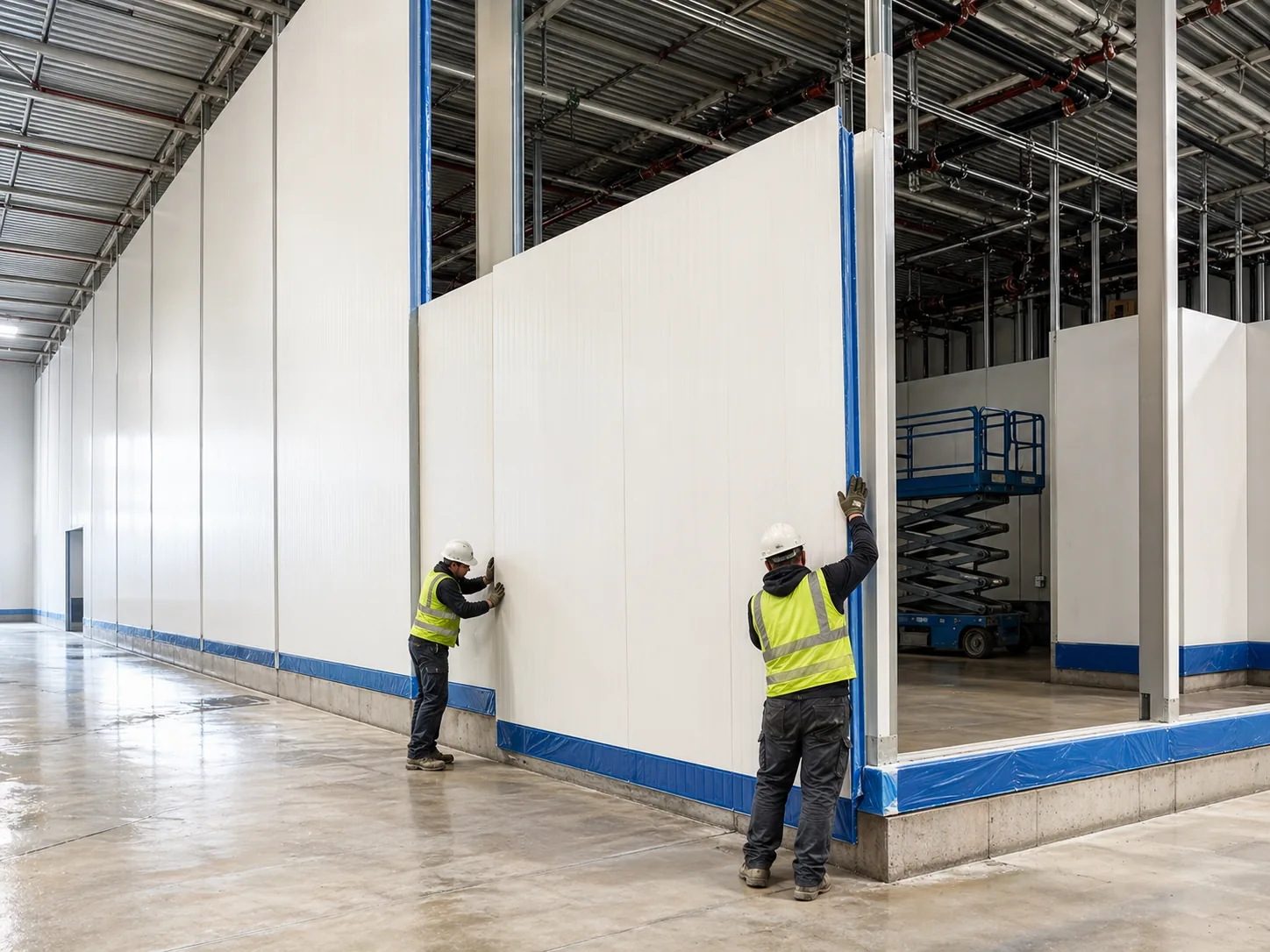
Cold storage construction showing integrated thermal envelope assembly
Integrated System

Five systems, not five line items.

Insulation, vapor barrier, air barrier, structural thermal breaks, and penetration sealing. Individual components don't perform in isolation — insulation only works if vapor doesn't reach the cold face; vapor barrier only works if it's continuous; continuity requires sealed joints and penetrations. The envelope is a system because every component depends on every other.

  • Insulation: IMP at thickness sized to operating temperature
  • Vapor barrier: continuous, warm side, sealed everywhere
  • Air barrier: blocks bulk air leakage at joints and penetrations
  • Thermal breaks: at every structural connection
  • Penetration sealing: USCB 6-step protocol
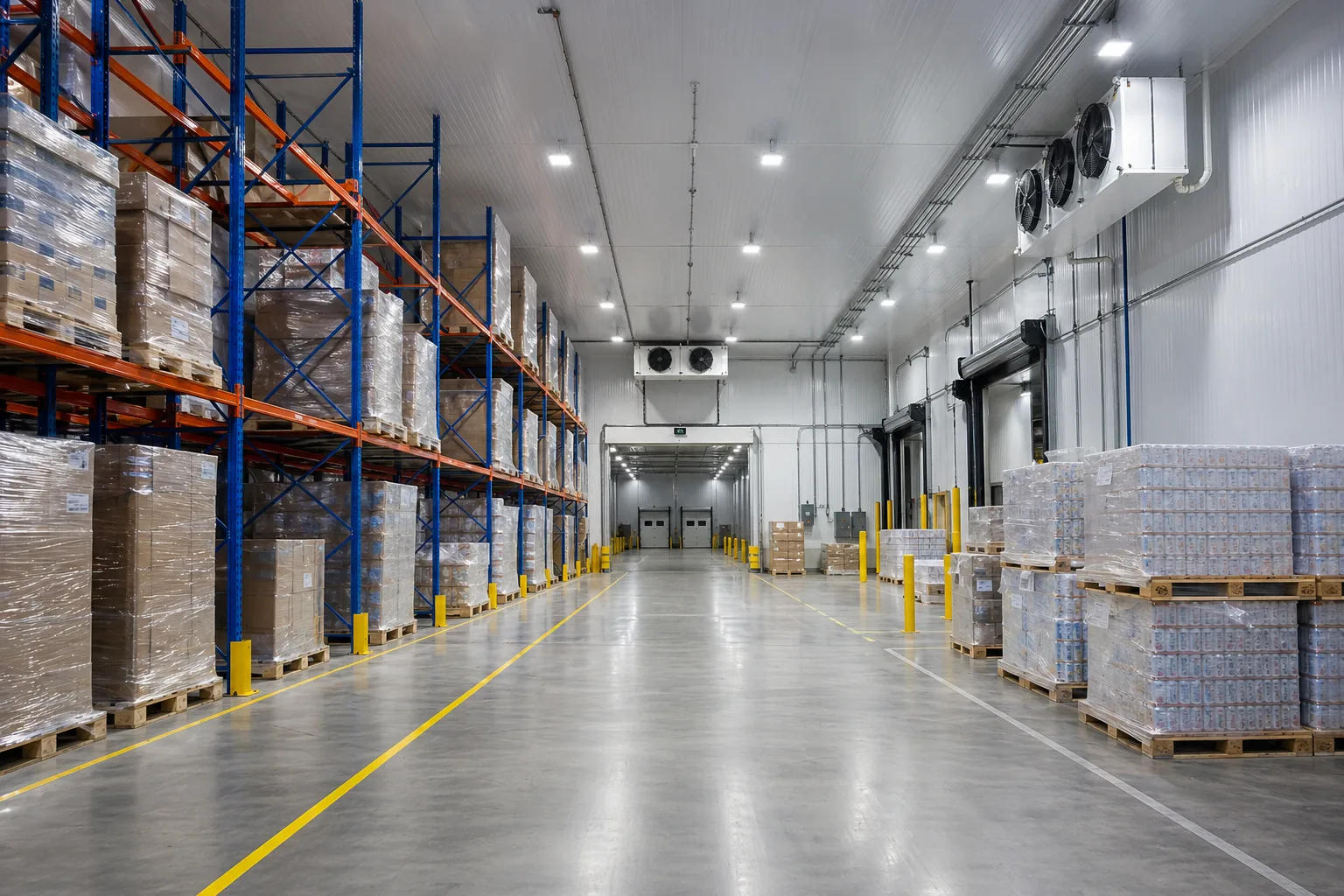
Insulated metal panel installation showing five integrated envelope systems coordination
Detail Execution

Most failures are execution failures, not material failures.

Discontinuous vapor barrier at joints, penetration sealing shortcuts, structural thermal bridges, edge condition shortcuts, corner shortcuts, field cut errors, fastener leakage. Each is preventable with proper installation and inspection — and each is invisible to non-specialist installers and inspectors.

  • Discontinuous vapor barrier at panel joints
  • Penetration sealing shortcuts (foam fill, vapor wrap, thermal break)
  • Structural thermal bridges at unprotected steel penetrations
  • Edge and corner condition sealant shortcuts
  • Field cuts that don't restore the vapor barrier
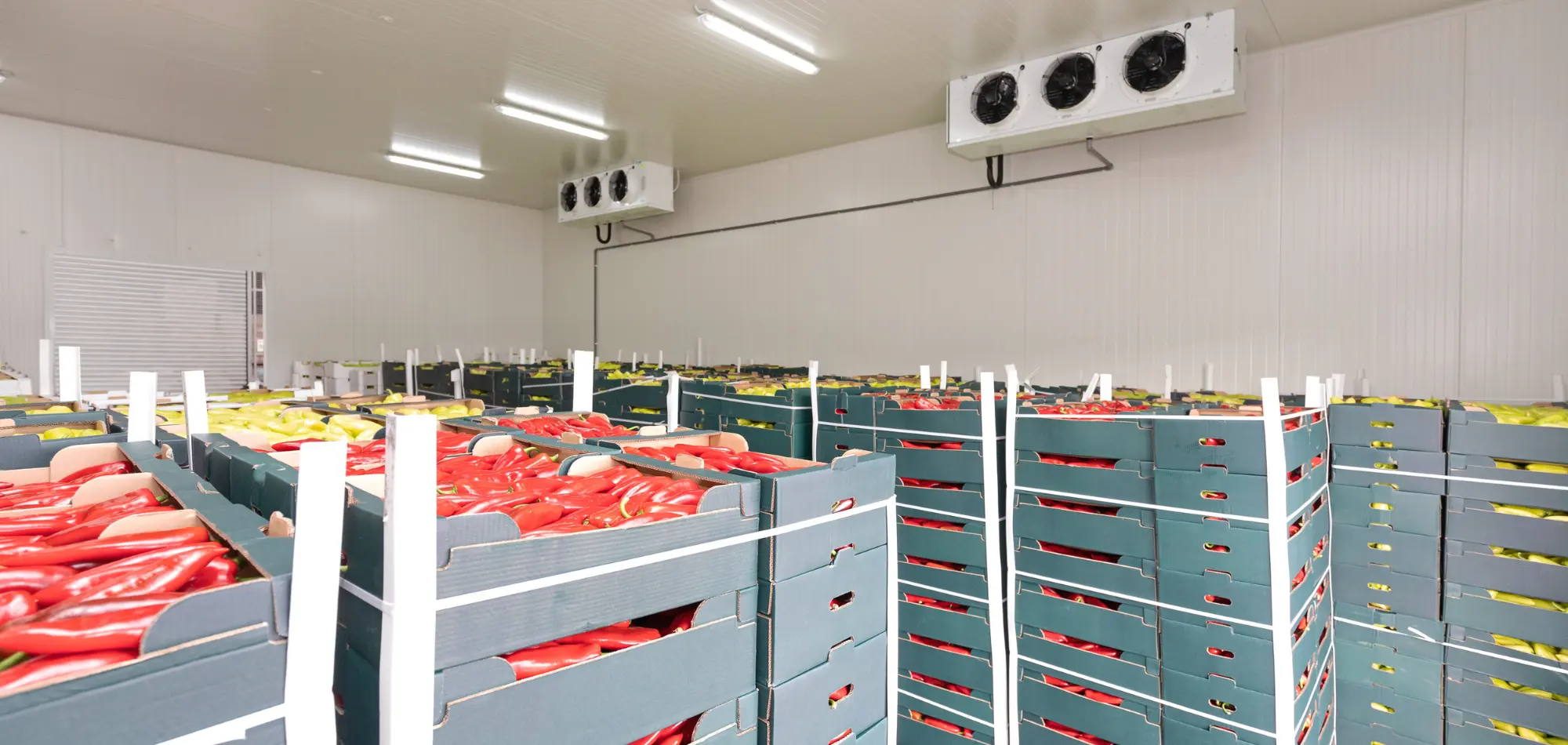
Refrigerated warehouse interior with envelope detail execution evident at joints and penetrations
Function

What the thermal envelope does

The thermal envelope's job: separate cold interior from warm exterior with minimum heat transfer and maximum durability over the life of the building.

To do that, the envelope must:

1. Limit heat conduction. Insulation R-value determines steady-state heat transfer rate. Higher R-value = less conduction = less refrigeration load.

2. Block vapor migration. Continuous vapor barrier on warm side prevents moisture from entering the assembly. Vapor migration produces condensation, foam saturation, and corrosion.

3. Block air leakage. Continuous air barrier prevents bulk airflow through the envelope. Air leakage is faster and more concentrated than vapor diffusion.

4. Manage thermal bridging. Structural connections and penetrations are short-circuit conduction paths. Thermal breaks at every penetration manage bridging.

5. Maintain integrity over time. Decades of thermal cycling, vibration, impact, and chemical exposure stress every envelope component. Engineered detailing and quality installation determine service life.

System 1: Insulation

Insulation — the primary thermal resistance layer

The primary thermal resistance layer. Modern cold storage uses insulated metal panels (IMP) with rigid foam core (PUR, PIR, or specialty).

Specifications by operating temperature:

Operating TemperatureWall IMPCeiling IMPR-Value Target
50°F–55°F4"4"–5"R-32 to R-40
34°F–45°F4"–5"5"R-32 to R-40
0°F to 20°F5"–6"6"R-40 to R-48
-10°F to 0°F6"6"R-48
-20°F to -10°F6"–7"7"R-48 to R-56
-40°F to -20°F6"–8"7"–8"R-48 to R-64

Read more about IMP systems →

System 2: Vapor Barrier

Vapor barrier — continuous on warm side

Continuous moisture barrier on warm side of insulation. Sealed at every joint, every penetration, every transition.

Read more about vapor barrier systems →

System 3: Air Barrier

Air barrier — blocks bulk air leakage

Continuous air barrier prevents bulk air leakage. In modern IMP construction, the painted steel facings serve as air barriers — but joints, penetrations, and transitions can leak air if not sealed.

Air leakage testing (where required): blower door testing or tracer gas methods to verify envelope air tightness. Standard for premium applications and where energy code requires.

System 4: Thermal Breaks

Structural thermal breaks at every penetration

Structural steel members that penetrate the envelope are short-circuit conduction paths. Three approaches:

  • Design around the structure — locate envelope penetrations where structural members don't conflict
  • Thermal break at the penetration — engineered thermal-structural isolator at the connection
  • Insulation wrap on penetrating member — continuous insulation extending into the warm or cold space

USCB designs envelope around structural members where feasible. At unavoidable penetrations, thermal break details extend the full panel thickness.

System 5: Penetration Sealing

Penetration sealing — the USCB six-step protocol

Every wall and ceiling penetration combines thermal break, vapor barrier discontinuity, and air leakage risk. Standard USCB protocol:

  1. Frame the penetration with structural collar
  2. Vapor membrane wrap on warm side
  3. Closed-cell spray foam fill (high-density)
  4. Flashed exterior collar
  5. In-process inspection
  6. Final inspection with thermal imaging
Design Approach

Coordinated design approach

Thermal envelope engineering at USCB follows a coordinated approach:

1. Define operating conditions. Operating temperature, ambient design conditions (hottest day, coldest day), humidity, internal heat loads.

2. Calculate envelope thermal load. Based on ambient conditions, target operating temperature, and projected envelope R-value. Iterative — adjust R-value to optimize cost vs operating cost.

3. Specify insulation system. IMP thickness by application, supplier, joint detail.

4. Design vapor barrier strategy. Continuous on warm side, sealed at every interface.

5. Identify structural conflicts. Locate structural members that intersect envelope. Design around or specify thermal breaks.

6. Map penetrations. Refrigeration piping, electrical, mechanical, fire protection, doors. Each gets a sealing protocol.

7. Specify commissioning. Thermal imaging, smoke pencil verification, performance testing.

8. Document as-built. Joint detailing, penetration sealing, thermal bridges all documented with photographs.

Failure Modes

Common engineering failures

The most common thermal envelope failures are not material failures but detail execution failures:

Discontinuous vapor barrier at panel joints. Improperly engaged cam-lock joints or missing field-applied sealant create discontinuities.

Penetration sealing shortcuts. Inadequate foam fill, missing vapor wrap, exposed thermal bridges at penetrations.

Structural thermal bridges. Structural steel members crossing the envelope without thermal breaks.

Edge condition shortcuts. Wall-to-floor and wall-to-roof transitions improperly sealed.

Corner condition shortcuts. Inside and outside corners with inadequate vapor seal.

Field cut errors. Panel cuts in the field that don't restore the vapor barrier or facing integrity.

Fastener penetration leakage. Through-fasteners without proper sealants.

Each of these is preventable with quality installation and inspection — but they're invisible to non-specialist installers and inspectors.

Commissioning

Commissioning the thermal envelope

USCB commissioning protocol for thermal envelope:

1. Visual inspection at every joint, penetration, and transition. Documented.

2. Smoke pencil testing in critical zones for air leakage.

3. Thermal imaging during pull-down to identify thermal anomalies (bridges, gaps, condensation paths).

4. Sustained operation verification — facility operated for commissioning period with temperature mapping. Anomalies appear within this window.

5. As-built documentation — joint sealing, penetration detailing, thermal break execution all documented.

Build with us

Tell us about your cold storage project. We engineer thermal envelopes that perform for 30+ years. Houston-headquartered · Design-build · Nationwide.

Budgeting

Cost and timeline planning ranges.

4" / R-32-R-40

Refrigerated 50°F–55°F

Wall IMP + ceiling 4"–5"

4"–5" / R-32-R-40

Refrigerated 34°F–45°F

Standard refrigerated envelope

5"–6" / R-40-R-48

Frozen 0°F to 20°F

Light frozen, double-gasket corners

6" / R-48

Frozen -10°F to 0°F

Standard frozen storage

6"–7" / R-48-R-56

Deep Frozen to -20°F

Sub-zero applications

6"–8" / R-48-R-64

Blast -40°F to -20°F

Maximum spec with PIR core

Services

Cold Storage Solutions, End to End

❄️ Cold Storage🧊 Blast Freeze🏗️ New Build🔧 Retrofit🌡️ Multi-Temp💊 Pharma-Grade📦 3PL Warehouses
FAQ

Common Questions

What is the thermal envelope of a cold storage facility?

The thermal envelope is the integrated building enclosure that separates cold interior from warm exterior. It includes five systems: insulation (typically IMP), vapor barrier, air barrier, structural thermal breaks, and penetration sealing. All five work together; failure of any one compromises performance.

Why is the thermal envelope considered a system?

Because individual components don't perform in isolation. Insulation only works if vapor doesn't reach the cold face. Vapor barrier only works if it's continuous. Continuity requires sealed joints, sealed penetrations, sealed transitions. Structural bridges undermine all of the above. The envelope is a system because every component depends on every other.

What's the most common envelope failure?

Detail execution failures at penetrations, joints, and transitions. Not material failures. Inadequate foam fill at penetrations, improperly engaged cam-lock joints, missing field sealants, structural thermal bridges. Each is preventable with proper installation and inspection.

How is the envelope tested?

Commissioning includes visual inspection at every joint/penetration/transition, smoke pencil testing for air leakage, thermal imaging during pull-down for thermal anomalies, and sustained operation verification with temperature mapping. As-built documentation captures detail execution for future reference.

What's the service life of a properly engineered envelope?

30–50 years for modern IMP envelope properly installed and maintained. Service life depends on initial detail execution, ongoing maintenance, and operational care (no impacts, no moisture damage from operations, no sealant aging).

How does temperature differential affect envelope design?

Higher temperature differential means more vapor driving force, more heat conduction, more thermal stress. Sub-zero and blast freezer applications require thicker insulation, tighter vapor seal, and more rigorous detailing than refrigerated applications. The envelope spec scales with temperature differential.

Can the envelope be repaired if damage occurs?

Surface damage can be patched. Penetration sealing can be re-done. Joint sealants can be replaced (with disruption). Deep panel damage (saturated foam, corroded facings) typically requires panel replacement, which is expensive and disruptive.

Field Log· Houston · 29.66°N · 95.47°WOperating Range−40°F → 70°F · ±0.5°FR-Value30–60 IMP
Call UsRequest a Quote