Cold Storage Contractors

A cold storage contractor designs, builds, and commissions temperature-controlled facilities as one accountable team, coordinating the envelope, refrigeration, slab, and dock systems that a general contractor treats as unrelated trades. Choosing the right one is a temperature-specific decision, not a low-bid one.

By US Cold Storage Builders Engineering Team
📅 Now booking 60–90 days out | Call (346) 676 - COLD
Performance IndexUpdated quarterly
Design-Build
Single-Contract Accountability
Self-Perform
Envelope & IMP Crews
+55°F to -40°F
Temperature Range Delivered
Cold Storage Contractors

Hiring a cold storage contractor is not the same as hiring a warehouse builder.

Scope

What a cold storage contractor delivers.

A specialist cold storage contractor owns the entire temperature-controlled scope, from pre-construction load calculations through commissioning, under one accountable contract. The systems that hold temperature are designed together rather than handed to separate subcontractors who never see the whole building.

  • Single point of accountability for cost, schedule, and thermal performance
  • Pre-construction engineering, permitting, and AHJ coordination included
  • Envelope, refrigeration, slab, dock, controls, and commissioning as one scope

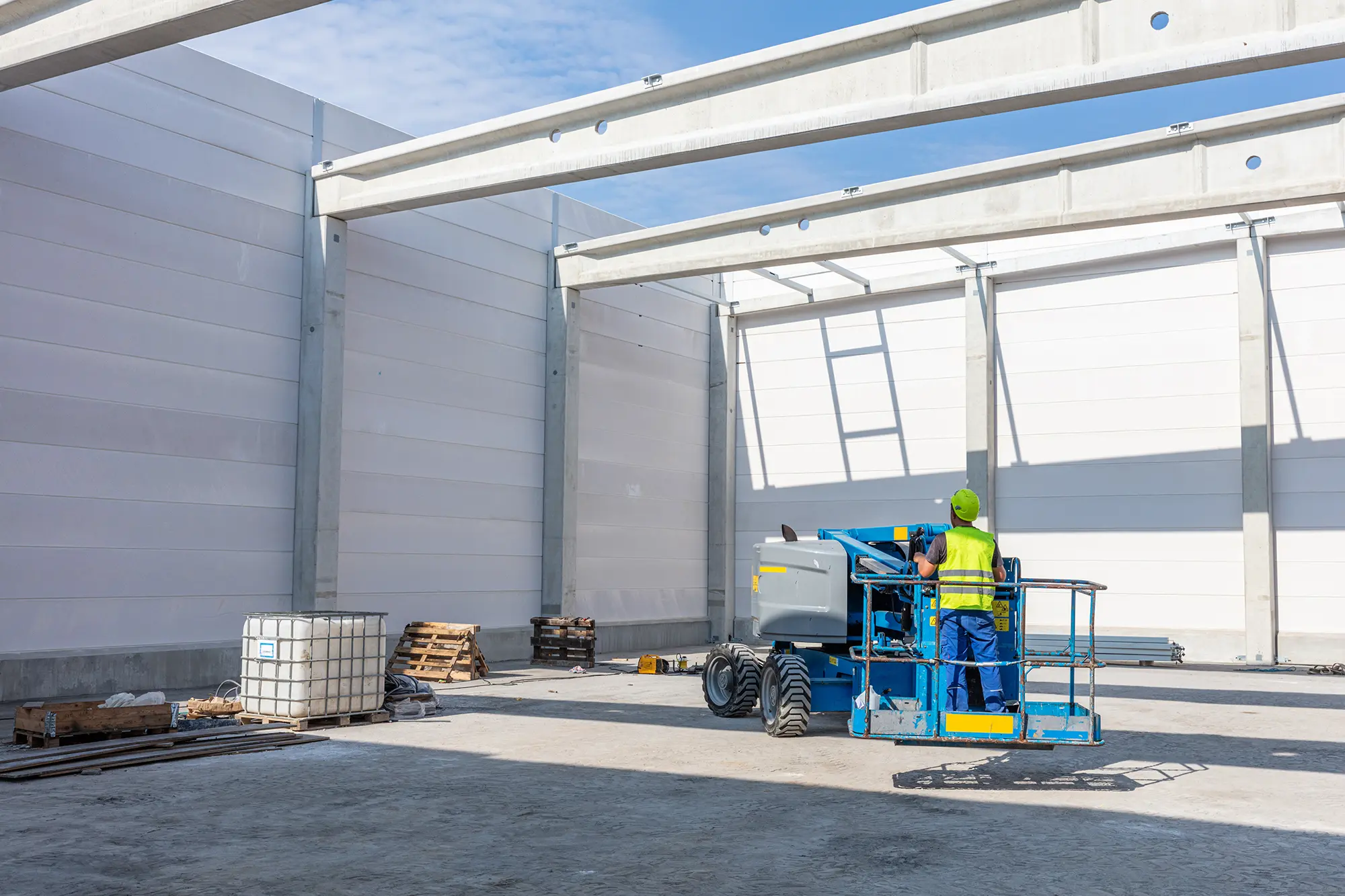
Cold storage contractor team reviewing a temperature-controlled facility build
Specialist vs General

A general contractor builds the box. A specialist builds the system.

The expensive cold storage failures, frost heave, vapor barrier breakdown, and refrigeration mismatch, do not appear until the building is running, and they trace back to decisions a general contractor would not know to make. Temperature-specific judgment is the entire value of a specialist contractor.

  • Refrigeration load sized to envelope, infiltration, and pull-down, not square footage
  • Underslab heat designed in for sub-zero rooms to prevent slab heave
  • Dock count driven by throughput and infiltration load
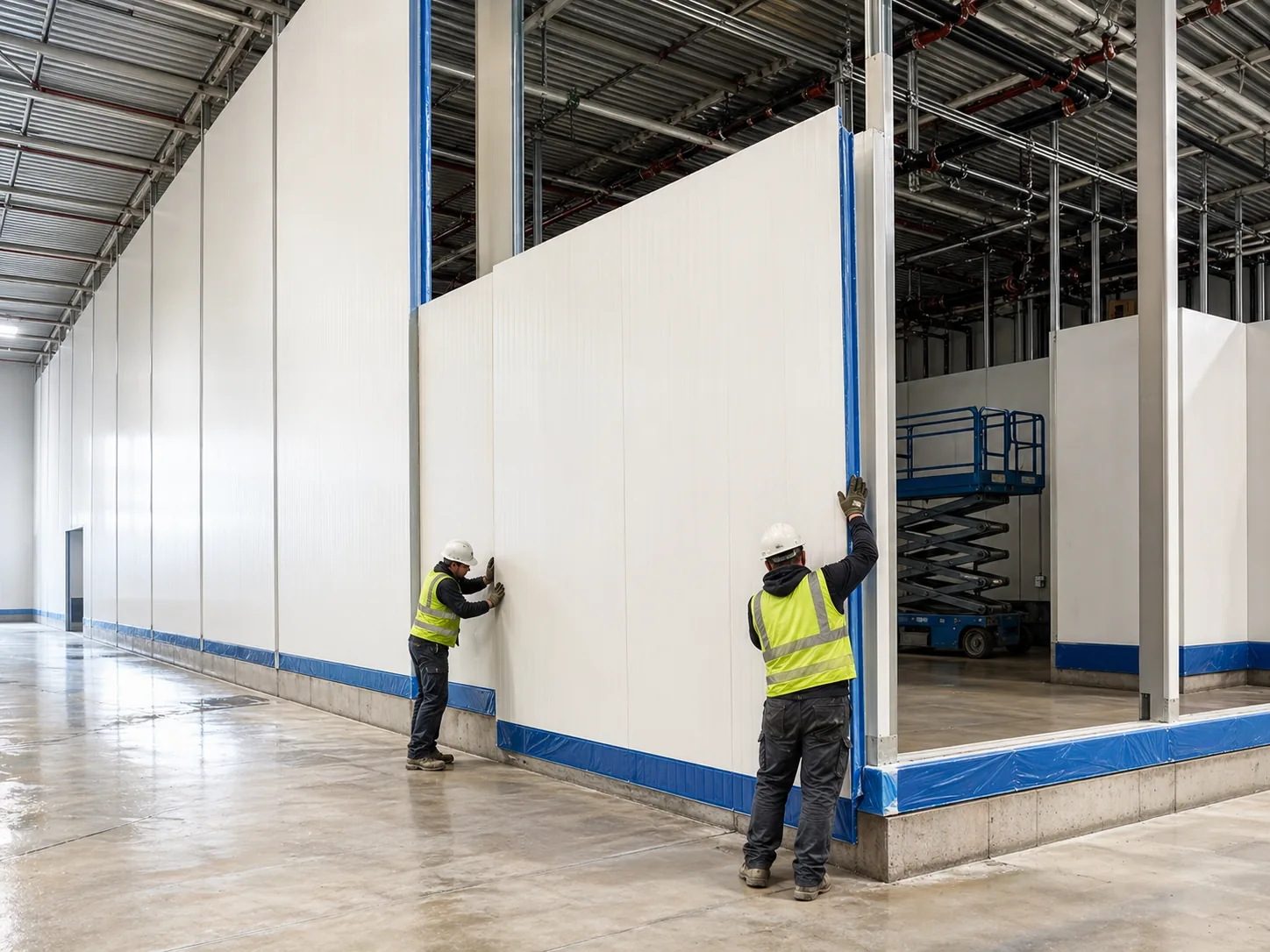
Cold storage contractor crew installing envelope on a warehouse build
Self-Perform

The envelope is too important to subcontract blind.

Insulated metal panel work is the highest-failure-cost system in cold storage, and its defects surface years later as condensation, delamination, and corrosion. USCB self-performs IMP installation so panel-joint engagement and vapor seal continuity are controlled directly, not assumed.

  • Self-performed insulated metal panel installation
  • Vapor barrier continuity verified at every joint and penetration
  • Vetted trade partners for refrigeration, electrical, and racking under USCB coordination
Self-performed insulated metal panel installation by a cold storage contractor
Definition

What a cold storage contractor does

A cold storage contractor is the firm accountable for delivering a working temperature-controlled facility, not just a structure. The scope covers the same five integrated systems on every project, the thermal envelope, slab, refrigeration, dock infrastructure, and controls and commissioning, plus the engineering and permitting that tie them together.

The reason specialization matters is that these systems are interdependent. Slab layout constrains racking, racking constrains evaporator placement, evaporator placement drives airflow, and airflow determines whether the building recovers temperature after a door cycle. A contractor who does not understand those dependencies produces a facility that costs more to run and never quite holds temperature. For the full engineering scope, see cold storage construction.

Trades

The trades a cold storage contractor coordinates

General contractor and design-build lead

The cold storage contractor holds the prime contract, owns the schedule and budget, and is accountable for thermal performance at handoff. In design-build delivery this also includes the engineering and design responsibility.

Insulated metal panel and envelope

The single most consequential scope. USCB self-performs IMP installation to control joint engagement, vapor seal continuity, and penetration detailing.

Refrigeration

Ammonia, CO2, glycol secondary loop, cascade, or DX systems, sized by load calculation and integrated with building controls. This scope drives both first cost and the majority of life-cycle operating cost.

Civil, foundation, and slab

Site work, foundations, and the slab system, including heated underslab loops and insulation for freezer and blast applications to prevent frost heave.

MEP, electrical, and fire protection

Power distribution and switchgear, lighting, building management integration, and freezer-rated dry-pipe or ESFR fire protection engineered for the storage configuration.

Specialty: docks, doors, and racking

Refrigerated doors, dock seals and shelters, air curtains, vestibules, and pallet racking or automated storage, each coordinated against the refrigeration and slab design.

Selection

How to choose a cold storage contractor

Cold storage is a category where the low bid is frequently the most expensive option over the life of the building. Vet contractors against criteria specific to temperature-controlled work, not general construction credentials.

What to verifyWhy it matters
Completed cold storage at your temperature classRefrigerated, frozen, and blast are different engineering problems; a refrigerated portfolio does not prove freezer capability
Self-perform or closely managed envelope scopeIMP and vapor barrier defects are the costliest and slowest failures to diagnose
Refrigeration design competenceLoad methodology and system selection drive operating cost for the life of the facility
Commissioning capabilityTemperature mapping and validated documentation prove the building holds spec before product arrives
Compliance track recordUSDA-FSIS, FDA, and cGMP requirements have to be designed in, not retrofitted
Referenceable ownersA specialist can point to facilities that have run at temperature for years

A contractor who cannot speak specifically to frost heave, vapor barrier continuity, and refrigeration load methodology is a general contractor working outside its specialty.

Delivery

Delivery models for cold storage projects

The contracting structure determines who carries design risk and how interdependent decisions get made. For cold storage, single-party accountability usually outperforms split responsibility.

ModelHow it worksBest fit
Design-buildOne contract for design and construction; single accountable teamMost cold storage projects, where envelope, slab, and refrigeration are interdependent
Design-bid-buildOwner holds a separate design team, then bids constructionOwners with an existing engineering relationship and completed design
CM-at-riskConstruction manager joins early, then delivers at a guaranteed maximum priceLarge or phased projects needing early budget certainty

USCB primarily delivers design-build, and works within the other structures when an owner already has a design team in place.

Coverage

Cold storage contractors near you

USCB is headquartered in Houston and delivers projects nationwide. Texas is our largest active market, with work across Dallas, San Antonio, Austin, and the major metros, and we mobilize crews and management to sites throughout the United States. See Texas cold storage construction or the full coverage map.

For a temperature-controlled project, the contractor's staffing and site management discipline matter more than office proximity. We resource each project to the standard the building requires regardless of region.

Cost

What a cold storage contractor's scope costs

A design-build cold storage contract bundles engineering, permitting, site work, envelope, refrigeration, dock infrastructure, controls, and commissioning into one price. 2026 ranges by class:

Facility Type2026 Cost / SF
Refrigerated warehouse (34°F-55°F)$155-$215
Multi-temperature distribution center$220-$295
Frozen storage (0°F to -10°F)$200-$280
Blast / sub-zero (-20°F to -40°F)$260-$340
Pharmaceutical GMP cold storage$280-$400+

For detailed budgeting, see cold storage cost per square foot or request the 2026 Cold Storage Cost Guide.

Budgeting

Cost and timeline planning ranges.

$155-$215/SF

Refrigerated warehouse

34°F-55°F chilled storage and distribution.

$220-$295/SF

Multi-temperature DC

Cooler, frozen, and ambient zones under one roof.

$200-$280/SF

Frozen storage

0°F to -10°F freezer storage with underslab heat.

$260-$340/SF

Blast / sub-zero

-20°F to -40°F batch pull-down and sub-zero holding.

$280-$400+/SF

Pharma GMP cold storage

Validated spaces with redundancy and documentation.

Design-Build

Delivery model

Single accountable contract for design and construction.

Services

Cold Storage Solutions, End to End

❄️ Cold Storage🧊 Blast Freeze🏗️ New Build🔧 Retrofit🌡️ Multi-Temp💊 Pharma-Grade📦 3PL Warehouses
FAQ

Common Questions

What does a cold storage contractor do?

A cold storage contractor designs, builds, and commissions temperature-controlled facilities as a single accountable team. The scope spans the insulated thermal envelope, slab and underslab heat, refrigeration system, dock infrastructure, controls, and commissioning, plus permitting and authority-having-jurisdiction coordination. The defining difference from a general contractor is that these systems are engineered together for a target temperature rather than bid out as unrelated trades.

What is the difference between a cold storage contractor, a builder, and a construction company?

In practice the terms are used interchangeably for the firm that delivers a cold storage facility. The distinction that matters is specialization: a specialist cold storage contractor self-performs or tightly controls the envelope and refrigeration scope and has a track record of temperature-controlled projects, while a general contractor treats cold storage as a conventional warehouse with cooling added. USCB is a design-build cold storage specialist; see cold storage construction for the full engineering scope.

How do I choose a cold storage contractor?

Vet for five things: a real cold storage track record with referenceable completed facilities at your temperature class; self-perform or closely managed envelope and IMP capability, since that is the highest-failure-cost system; refrigeration design competence, in-house or through a dedicated engineering partner; commissioning capability with temperature mapping and validated documentation; and the compliance experience your product requires, whether USDA-FSIS, FDA, or cGMP. A contractor who cannot speak specifically to frost heave, vapor barrier continuity, and refrigeration load methodology is a general contractor, not a cold storage specialist.

Are you cold storage contractors near me?

USCB is headquartered in Houston, Texas, and takes projects nationwide. Texas is our largest active market, and we mobilize crews and project management to sites across the United States. For a local project, the relevant question is not proximity of the office but whether the contractor will staff and manage your site properly, which we do regardless of region.

Do you self-perform the work or subcontract it?

USCB self-performs insulated metal panel installation, the highest-failure-cost system in cold storage, to control panel-joint engagement, vapor barrier continuity, and penetration detailing. Specialized scopes such as refrigeration, electrical, and racking are delivered through vetted trade partners under our coordination and quality control, with the envelope and overall thermal performance owned by us.

What delivery models do you offer?

USCB primarily delivers design-build, where one contract covers design and construction and a single team is accountable for cost, schedule, and performance. We also work within design-bid-build and construction-manager-at-risk structures when an owner already has a design team. Design-build is usually the better fit for cold storage because envelope, slab, and refrigeration decisions are interdependent and benefit from a single accountable party.

What does a cold storage contractor's price include?

A design-build cold storage contract typically includes engineering and design, permitting, site work and foundation for ground-up projects, the insulated envelope, refrigeration system, dock infrastructure, controls, fire protection, and commissioning. 2026 ranges run roughly $155-$215/SF for refrigerated, $200-$280/SF for frozen, and $260-$400+/SF for blast and pharmaceutical work, driven by temperature, redundancy, racking, and jurisdiction.

Field Log· Houston · 29.66°N · 95.47°WOperating Range−40°F → 70°F · ±0.5°FR-Value30–60 IMP
Call UsRequest a Quote