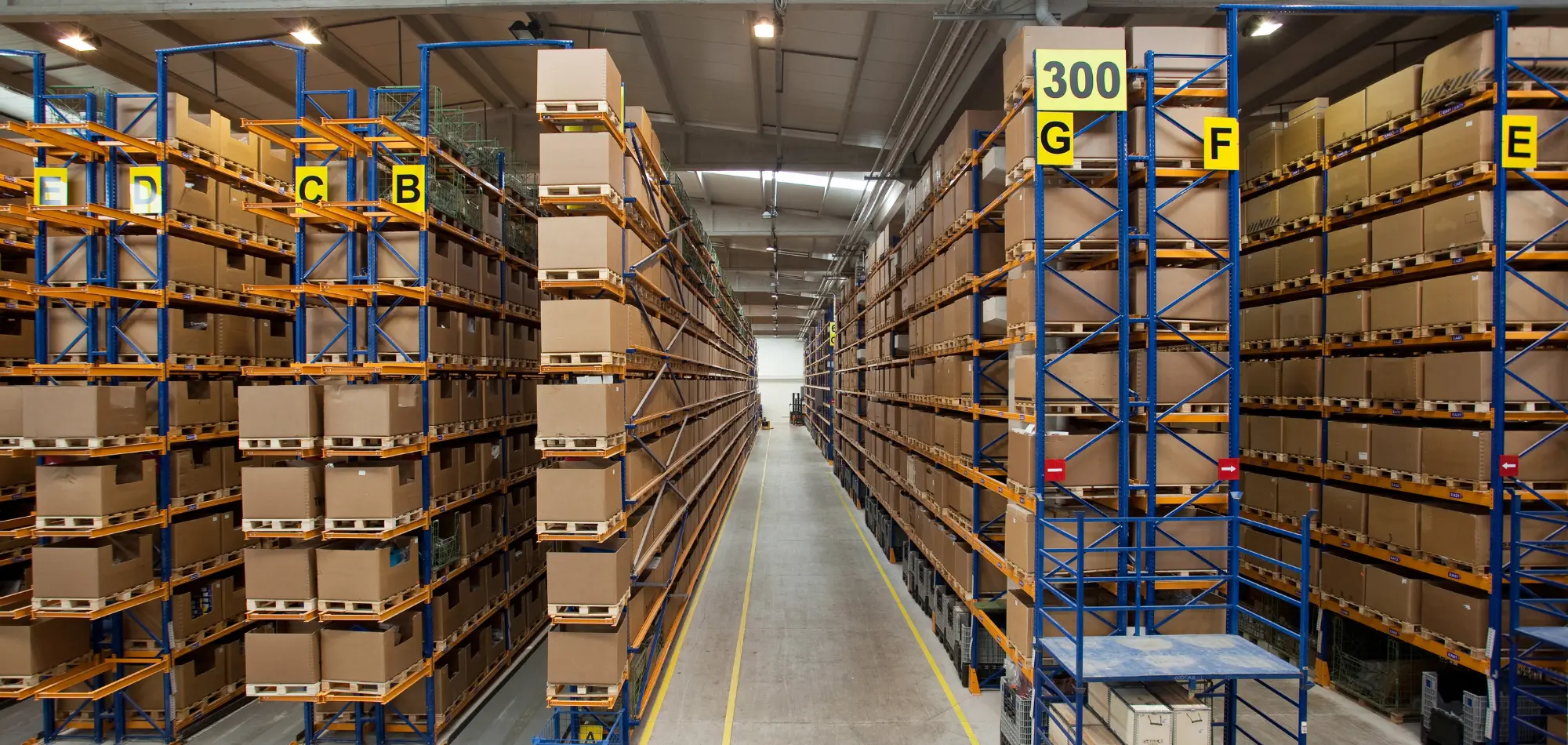
Dock Design for Refrigerated and Frozen Warehouses

Dock infrastructure is typically the single largest variable refrigeration load in operating cold storage. A 100,000 SF frozen warehouse with 30 dock doors running normal operations can have door infiltration load 2–3x its calculated envelope load. Dock design — door count, door types, sealing systems, levelers, air management — directly determines facility throughput, refrigeration cost, and operational efficiency for the life of the building.

By US Cold Storage Builders Engineering Team
📅 Now booking 60–90 days out | Call (346) 676 - COLD
Performance IndexUpdated quarterly
2–3x
Infiltration vs Envelope Load
3 vs 50
Sq In — Seals vs Shelters
$25K–$40K
Per Dock Position All-In
Specifications

Dock infrastructure dominates operating refrigeration load.

Operational Impact

Dock design drives load, throughput, stability, energy.

Dock decisions persist for the life of the facility. They determine refrigeration operating cost (door infiltration is typically the largest variable load), facility throughput (the operational metric that matters), temperature stability near doors, energy consumption, labor cost, and yard footprint. Retrofitting dock infrastructure is expensive and disruptive — get it right at construction.

  • Refrigeration load: dock infiltration typically the largest variable
  • Facility throughput: dock count and yard config determine capacity
  • Temperature stability: tighter dock = less swing near doors
  • Energy consumption: drives utility cost for 30+ years
  • Labor cost: efficient dock reduces travel and wait time
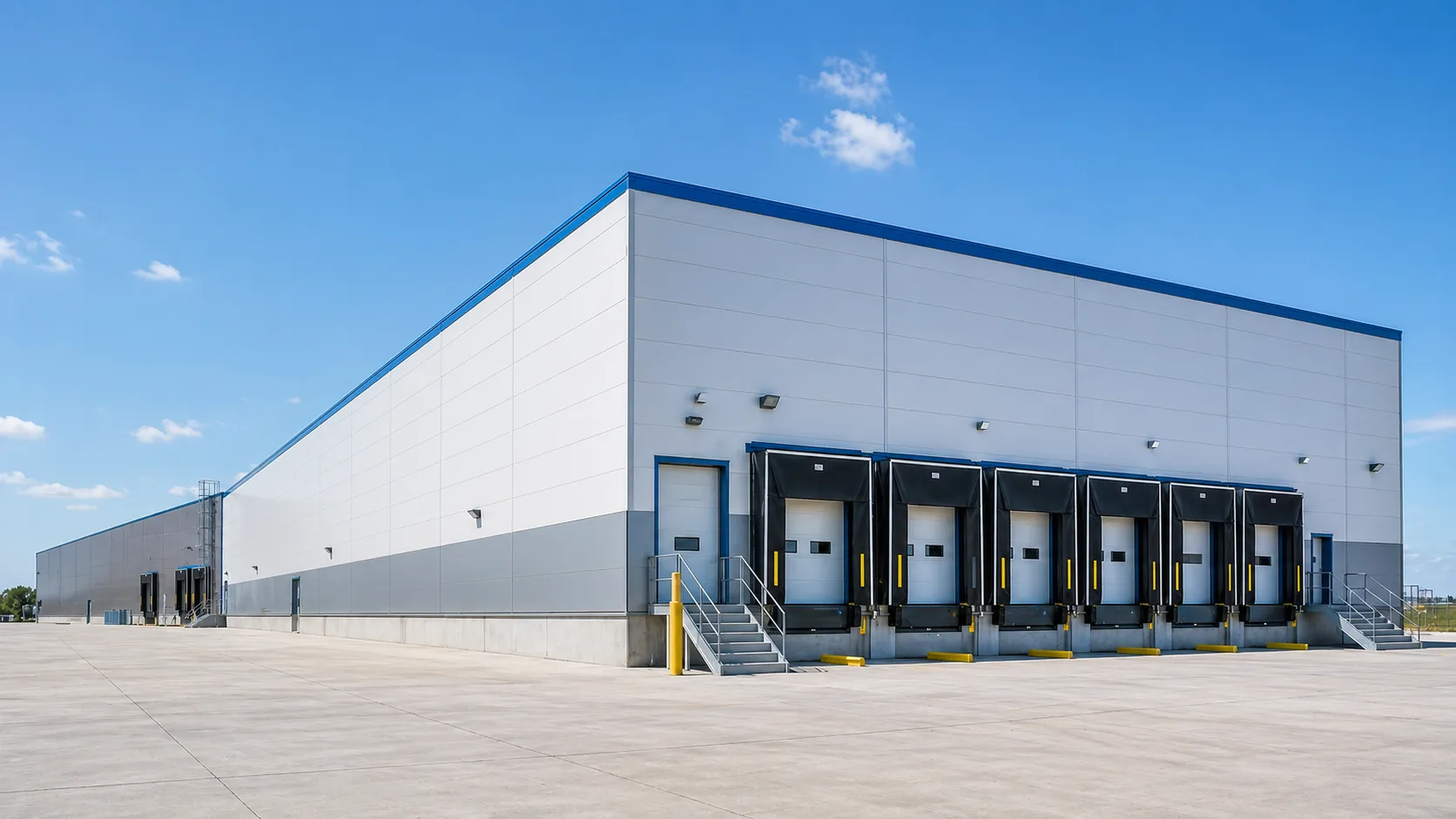
Cold storage warehouse exterior loading dock face with refrigerated overhead doors
Sizing

Dock count sizes to throughput, not square footage.

Distribution: 1 dock per 8,000–12,000 SF. Cross-dock high-cycle: 1 per 4,000–6,000 SF. Low-turn frozen storage: 1 per 12,000–18,000 SF. Pharmaceutical: lower density, higher security. Detailed sizing calculates peak-hour trucks × dock occupancy time × capacity buffer.

  • Distribution: 1 per 8,000–12,000 SF
  • Cross-dock: 1 per 4,000–6,000 SF
  • Low-turn frozen: 1 per 12,000–18,000 SF
  • Pharma: lower density, higher security
  • Yard truck-to-dock ratio: 1.5:1 to 2:1
Refrigerated warehouse dock face with engineered dock count and yard layout
Seal vs Shelter

Seals tighter, shelters more forgiving.

Dock seals = ~3 sq in opening with precise trailer alignment; best for single-tenant high-volume. Dock shelters = ~50 sq in opening with wide tolerance; standard for 3PL multi-tenant. Vertical-storing leveler + dock seals = tightest infiltration available, for critical applications.

  • Dock seals: ~3 sq in opening, single-tenant high-volume
  • Dock shelters: ~50 sq in, multi-tenant variable geometry
  • Vertical-storing leveler + seals: critical infiltration applications
  • Decision driven by who controls trailer geometry
Loading bay with truck at refrigerated dock face showing seal interface
Impact

What dock design affects

Dock design influences:

Refrigeration load. Door infiltration is typically the largest variable load in operating cold storage. Better dock design = lower infiltration = lower operating cost.

Facility throughput. Dock count and yard configuration determine how many trailers can be loaded/unloaded simultaneously and how quickly. Throughput is the operational metric that matters.

Temperature stability. High-cycle dock operations cause temperature swings near doors. Better dock design = tighter temperature stability = product quality protection.

Energy consumption. Refrigeration load drives electrical consumption. Better dock infiltration management = lower utility cost.

Operational labor cost. Efficient dock design reduces forklift travel distance, reduces trailer wait time, reduces operational complexity.

Trailer staging requirements. Dock count drives yard size. Bigger yard = more land cost. Right-sized dock design optimizes land use.

Dock decisions made at design persist for the life of the facility. Retrofitting dock infrastructure is expensive and disruptive — get it right at construction.

Dock Count

Dock count sizing

Dock count is sized to projected pallet throughput, not square footage. Square footage matters for envelope cost; throughput matters for operational viability.

Rule of thumb by application

ApplicationTypical Dock Density
Low-turn frozen storage1 dock per 12,000–18,000 SF
Standard refrigerated distribution1 dock per 8,000–12,000 SF
Cross-dock high-cycle1 dock per 4,000–6,000 SF
3PL multi-tenantVariable by tenant size; design for largest expected tenant
PharmaceuticalLower density (often 1 per 15,000+ SF), higher security
Frozen food manufacturing with integrated storageMixed: process docks + storage docks separately sized

Detailed sizing methodology

For a more rigorous sizing approach:

1. Project peak-hour pallet throughput. Use historical data if operation is established; use industry benchmarks if not. Pallets in + pallets out at peak hour.

2. Calculate pallets per truck. Standard 53' trailer holds 28–30 floor-loaded pallets, or 26 racked pallets. Refrigerated trailers slightly less due to insulation. Mixed-pallet loads vary.

3. Calculate trucks per hour at peak. Total pallets / pallets per truck = trucks per hour at peak.

4. Calculate dock occupancy time per truck. Including approach, backup, position, load/unload, paperwork, departure. Typical: 30–60 minutes per truck for full-load operations; 15–25 minutes for cross-dock.

5. Calculate concurrent docks needed. Trucks per hour × dock occupancy time = simultaneous docks required at peak.

6. Add capacity buffer. 20–30% buffer for variability, maintenance, and growth.

7. Round up to architectural dock count. Architectural dock count is sized to peak-hour need plus buffer.

For most operations, this approach lands within the rule-of-thumb ranges above. For specialty operations (urban DC with limited yard, high-bay automated facility, etc.), detailed analysis can deviate significantly from rules of thumb.

Yard

Truck-to-dock ratio (yard sizing)

Yard layout sized to truck-to-dock ratio:

Operation TypeTypical Ratio
Distribution (full-load focus)1.5:1 (1.5 truck positions per active dock)
High-cycle distribution2:1
Cross-dock operations1.5:1 to 2:1
3PL multi-tenant2:1 (often higher due to multiple customers' trailers)

Insufficient yard creates dock backup, traffic congestion, and operational disruption. Excess yard is wasted real estate. Right-sized yard balances operational efficiency with land cost.

Yard layout components: trailer staging positions, drive aisles (60' minimum for standard tractor-trailer), guard house if security required, yard lighting, line striping, trailer drop locations if applicable.

Doors

Refrigerated overhead doors

Standard cold storage dock door is a refrigerated overhead door — insulated panel construction with integral perimeter seals.

Door construction

  • Panel construction: Insulated steel panels, R-12 to R-25 depending on application
  • Frame: Insulated steel frame with thermal breaks
  • Perimeter seal: Integral compressible seal at door perimeter (top, sides, bottom)
  • Pit-seal: Floor-level seal between door and dock floor
  • Header seal: Top seal against trailer top
  • Locking mechanism: Multiple-point locking for tight perimeter compression when closed

R-value by application

ApplicationDoor R-Value
Refrigerated warehouse (34°F–55°F)R-12 to R-18
Frozen storage (0°F to -10°F)R-20 to R-25
Sub-zero / blast freezerR-25+
Pharma cold storageR-20 to R-25 with sealed perimeter

Door operator types

  • Chain hoist: Standard for many cold storage applications; lower cost, slower cycle time
  • Jackshaft: Standard for high-cycle operations; faster cycle than chain hoist
  • High-speed: Specialty operators for very high-cycle applications

Cycle time matters for infiltration. Slow operators leave door open longer per cycle = more infiltration = higher refrigeration load.

Seal vs Shelter

Dock seals vs dock shelters

The single biggest dock design decision is seal vs shelter at the trailer interface.

Dock seals

Configuration: Foam pads (typically 10"–14" projection from dock face) that compress against the trailer when the trailer backs into the dock. Three pads — two side pads and one top pad.

Performance: Tight infiltration (~3 sq in of opening when trailer is square against the dock). Best infiltration performance of any standard dock interface system.

Trade-offs:

  • Requires precise trailer alignment (driver skill matters)
  • Slight wear on each truck contact
  • Specific to trailer geometry (standard 53' trailers work well; non-standard equipment may not seal properly)

Best applications: Single-tenant high-volume operations where you control which trailers show up. Standard for frozen DCs, large refrigerated DCs, automated operations.

Dock shelters

Configuration: Fabric or rubber curtain that extends from the dock face. Two side curtains and one top curtain. Curtains contact the trailer at edges but don't fully seal.

Performance: Wider infiltration tolerance (~50 sq in typical opening). Accommodates misaligned trailers, varied trailer geometry, and operator skill variance.

Trade-offs:

  • Higher infiltration than seals
  • More forgiving of operational variance
  • Typically lower initial cost

Best applications: 3PL multi-tenant operations where trailer geometry varies, retail distribution where multiple carriers serve the facility, operations with high driver turnover.

Vertical-storing levelers + dock seals

The premium dock interface: vertical-storing leveler retracts vertically (rather than horizontally) and dock seals seal tightly when not in use.

Performance: Tightest infiltration available on any standard system. Lower than horizontal-storing leveler interfaces.

Trade-offs:

  • Highest capital cost
  • Specialized equipment

Best applications: Critical infiltration-control operations (frozen DCs, pharma facilities, high-energy-cost markets).

Decision framework

OperationRecommended Interface
Single-tenant frozen DCDock seals + standard leveler, or seals + vertical-storing
Multi-tenant 3PL refrigeratedDock shelters (operator variance)
Cross-dock high-cycle refrigeratedDock shelters or specialty high-speed solutions
Pharmaceutical cold storageVertical-storing + dock seals (critical infiltration)
Foodservice DCDock seals if operationally controlled, shelters if multi-carrier
Levelers

Dock levelers

Leveler types

  • Hydraulic: Standard for most operations. Hydraulic ram lifts and lowers the leveler. Cycle time moderate. Service-friendly.
  • Air-powered: Standard for higher-cycle operations. Faster cycle than hydraulic. Specialty maintenance.
  • Vertical-storing: Highest infiltration performance. Premium cost.
  • Mechanical (spring-actuated): Legacy systems. Generally not specified for new construction.
  • Edge-of-dock (EOD) levelers: Smaller, lower-cost levelers for occasional truck operations. Not standard for full-load operations.

Leveler sizing

  • Length: 8' standard for most refrigerated applications; 10' for clearance accommodations
  • Width: Sized to door opening (typically 6'–7')
  • Capacity: 25,000–35,000 lb static rating standard; higher for heavy-load operations
  • Lip type: Mechanical lip standard; powered lip for premium

Leveler maintenance

Hydraulic and air-powered levelers require periodic maintenance — hydraulic fluid replacement, pneumatic system maintenance, leveler structural inspection. Service contracts standard.

Air Management

Air curtains, high-speed doors, vestibules, strip curtains

Air curtains

Fans positioned above doors that create high-velocity air streams across door openings. Reduce infiltration during door-open cycles.

When air curtains work:

  • Door open time exceeds ~30 seconds per cycle
  • Air curtain has time to establish flow pattern
  • Door size matches air curtain capacity
  • Operations support continuous air curtain operation during door cycles

When air curtains don't work:

  • Very fast cycle times (high-speed roll-up doors close before air curtain establishes)
  • Inadequate sizing for door opening
  • Air curtain not operated continuously

For most cold storage applications with refrigerated overhead doors and standard operators, air curtains supplement door seals — they don't replace them.

High-speed roll-up doors

Interior doors at temperature transitions or high-cycle forklift entry points.

Configuration: Flexible fabric or insulated panel doors that open and close in 1–3 seconds. Operator triggered or sensor-activated.

Applications:

  • Interior doors between cooler and frozen zones in multi-temp facilities
  • Forklift entry doors at high-cycle locations
  • Process flow doors at temperature transitions

Performance: Significantly reduce infiltration through fast cycle time. Door is closed before infiltration develops.

Cost: Higher capital cost than overhead doors. Specialty service requirements.

Standard applications: Multi-temp DCs, frozen storage with high-cycle interior fork traffic, food processing facilities with frozen zones.

Vestibules

Double-door personnel entries with both doors interlocked — only one is open at a time.

Configuration: Small entry vestibule (typically 6'–8' deep) between ambient and cold space, with door at each end. Interlock prevents both doors being open simultaneously.

Applications: Personnel entries to frozen and sub-zero facilities, high-traffic personnel entries to refrigerated facilities.

Performance: Prevents direct airflow path from ambient to cold space. Even during high-traffic operation, infiltration remains low.

Cost: Modest above standard personnel door. Worthwhile in frozen and sub-zero applications.

Strip curtains

Vertical strip curtains at lower-cycle forklift doors where high-speed roll-up isn't justified.

Configuration: Hanging plastic strips that part for forklift passage and close behind.

Applications: Lower-cycle interior doors, transition zones where infiltration reduction is desired but high-speed doors are over-specified.

Performance: Modest infiltration reduction. Wear over time and need replacement.

Build with us

Tell us about your operations — pallet throughput, dock count, multi-tenant or single-tenant, refrigerated or frozen. We engineer dock infrastructure that performs operationally and thermally. Houston-headquartered · Design-build · Nationwide.

Budgeting

Cost and timeline planning ranges.

1 per 8K–12K SF

Distribution Dock Density

Standard refrigerated distribution

1 per 4K–6K SF

Cross-Dock Density

High-cycle inbound/outbound

1 per 12K–18K SF

Low-Turn Frozen Density

Longer dwell, lower cycle rate

R-12 to R-18

Refrigerated Door R-Value

34°F–55°F applications

R-20 to R-25+

Frozen Door R-Value

Sub-zero requires R-25+

$25K–$40K all-in

Per Dock Position

Premium configurations $50K+

Services

Cold Storage Solutions, End to End

❄️ Cold Storage🧊 Blast Freeze🏗️ New Build🔧 Retrofit🌡️ Multi-Temp💊 Pharma-Grade📦 3PL Warehouses
FAQ

Common Questions

How is dock count determined for a refrigerated warehouse?

Dock count is sized to projected pallet throughput at peak hour, not square footage. Typical distribution operations run one dock per 8,000–12,000 SF. High-cycle cross-dock operations run one dock per 4,000–6,000 SF. Low-turn frozen storage runs one dock per 12,000+ SF. Detailed sizing methodology calculates peak-hour trucks based on throughput, multiplies by dock occupancy time, adds capacity buffer, and rounds up to architectural dock count.

Should I use dock seals or dock shelters?

Dock seals provide tighter infiltration (~3 sq in opening) but require precise trailer alignment. Use seals for single-tenant high-volume operations where you control trailer geometry. Dock shelters provide wider tolerance (~50 sq in opening) for varied trailer geometry. Use shelters for 3PL multi-tenant operations where you can't control which trailers show up. Vertical-storing levelers with dock seals provide the tightest infiltration available for critical applications.

What R-value do refrigerated dock doors need?

Depends on application. Refrigerated warehouse (34°F–55°F): R-12 to R-18 doors. Frozen storage (0°F to -10°F): R-20 to R-25. Sub-zero / blast freezer: R-25+. Pharma cold storage: R-20 to R-25 with sealed perimeter. Door perimeter seal quality matters as much as door R-value — a high-R-value door with poor perimeter seal still leaks.

How much does a dock door cost all-in?

Each dock position costs $25,000–$40,000 all-in — door hardware, seal or shelter, leveler, electrical, slab work, and yard area allocation. High-end positions (vertical-storing levelers, premium air management) can run $50,000+. Multiply by dock count to estimate dock infrastructure cost in your project.

Do high-speed roll-up doors really reduce infiltration?

Yes, significantly. High-speed doors cycle in 1–3 seconds vs 10–20 seconds for standard overhead doors. The door is closed before infiltration develops. Standard applications: interior doors between temperature zones in multi-temp facilities, high-cycle forklift entry points, process flow transitions. Higher capital cost than overhead doors, but the infiltration reduction pays back in operating cost over the life of the building.

Do I need air curtains on every dock door?

No. Air curtains work when door open time exceeds ~30 seconds per cycle. Standard refrigerated overhead doors with standard operators close before air curtains establish flow pattern, so air curtains add limited value. Air curtains are most useful at doors that stay open for extended cycles (loading/unloading without dock seal, transition doors during high-cycle operations).

What's the difference between vestibules and strip curtains?

Vestibules are double-door personnel entries with interlocked doors — only one open at a time. Strip curtains are hanging plastic strips that part for traffic passage. Vestibules provide much better infiltration control but are limited to personnel entries. Strip curtains are used at forklift doors where high-speed roll-up isn't justified.

How do you size the yard for trailer staging?

Yard sized to truck-to-dock ratio. Standard distribution: 1.5:1 (1.5 truck positions per active dock). High-cycle distribution: 2:1. 3PL multi-tenant: 2:1 or higher. Yard components: trailer staging positions, drive aisles (60' minimum for standard tractor-trailer), guard house if security required, lighting, line striping.

Field Log· Houston · 29.66°N · 95.47°WOperating Range−40°F → 70°F · ±0.5°FR-Value30–60 IMP
Call UsRequest a Quote